



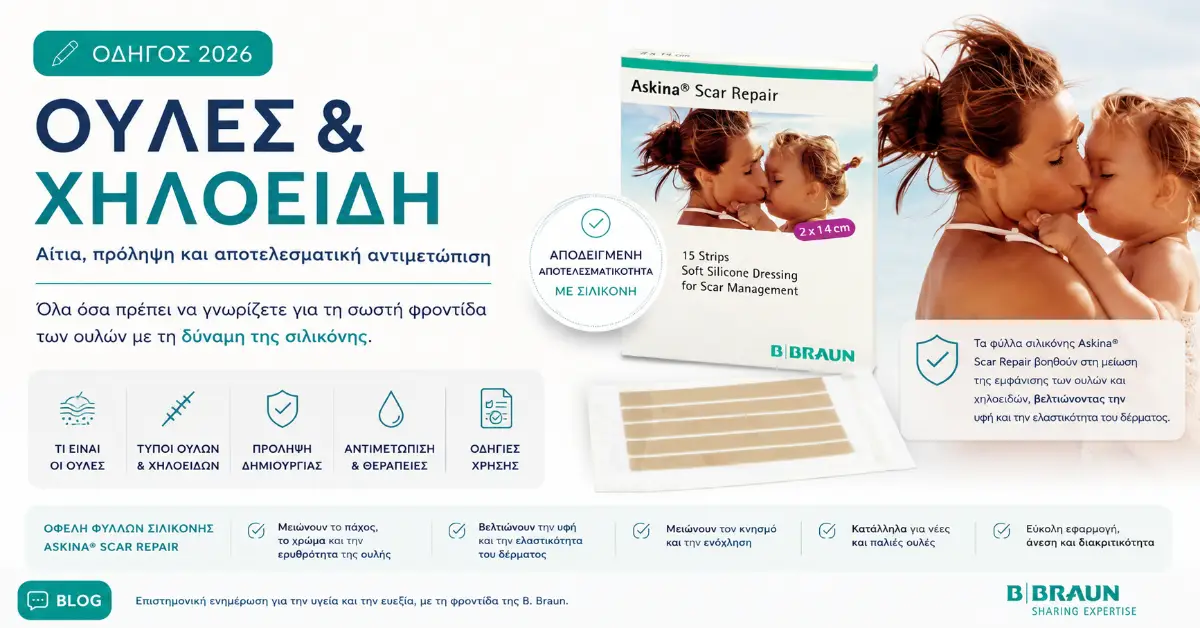
Чому утворюються шрами — і що ми можемо з цим зробити
Щоразу, коли наша шкіра травмується — внаслідок операції, кесаревого розтину, нещасного випадку, акне або опіку — організм починає складний процес загоєння, який часто призводить до утворення шраму. У більшості випадків шрам є нормальним і поступово зникає. Однак у 30-50% хірургічних процедур шрам стає гіпертрофічним або келоїдним [1] — тобто, піднятим, червоним і часто естетично або функціонально порушує здоров'я.
У цьому повному посібнику від Traumacare Medical Group ви дізнаєтесь:
- 4 типи шрамів та як їх розпізнати
- 3 фази загоєння та коли втручатися
- Сучасні методи лікування (силікон, кортизон, лазер, кріотерапія, хірургія, тиск)
- Чому силіконові пластирі Askina Scar Repair (B Braun) є першою лінією лікування №1
- Як запобігти появі поганого шраму з дня на день один
- Коли звернутися до дерматолога або пластичного хірурга
4 типи рубців — як їх розпізнати
1. Зрілий рубець
Характеристики: Плоский або злегка піднятий, блідий або рожевий (не червоний), у межах початкової травми, безсимптомний.
Хронологія: Формується через 6-12 місяців після травми.
Прогноз: Добрий. Спеціальне лікування не потрібне — лише захист від сонця для запобігання потемнінню.
2. Гіпертрофічний рубець
Характеристики: Піднятий (до 4 мм), червоний або рожевий, в межах початкової рани. Може свербіти або боліти.
Частота: У ~50% кесаревих розтинів та багатьох операціях на черевній/грудній порожнині.
Прогноз: Може покращитися або навіть зникнути протягом 6-12 місяців силіконової терапії.
➡️ Дізнайтеся більше про гіпертрофічні рубці
3. Келоїдний рубець
Характеристики: Сильно піднятий, темно-червоний/фіолетовий/коричневий, поширюється за межі початкової рани. Свербіж, біль, естетична проблема.
Фактори ризику: Генетична схильність, темна шкіра (за класифікацією Фіцпатріка III-VI), молодий вік, область грудини/плеч/вух.
Прогноз: Більш складний. Поєднання ін'єкцій силікону + кортизону + лазера. У важких випадках хірургічне видалення + опромінення.
➡️ Повна стаття: Гіпертрофічний проти келоїдного
4. Атрофічний рубець
Характеристики: Глибокий (нижче рівня шкіри). Зазвичай від акне або вітряної віспи.
Підтипи: Крижаний рубець (вузький глибокий), Бокскар (широкий з чіткими межами), Роллінг (хвилястий).
Прогноз: Не лікується силіконом. Потрібні мікронідлінг, лазерна абляція, дермальні філери або субцизія.
➡️ Повна стаття про шрами від акне
Як формується шрам — 3 фази загоєння
Фаза 1 — Запалення | Дні 0-3
Після травми організм надсилає тромбоцити та лейкоцити. Ділянка червона, набрякла, тепла. Нормальна.
Фаза 2 — Проліферація | Дні 3-21
Фібробласти швидко виробляють колаген III типу. Утворюється грануляційна тканина. Шкіра закривається.
🎯 Критична фаза для втручання: Саме тут починається нанесення силіконової плівки (після загоєння та зняття швів). Профілактика > лікування.
Фаза 3 — Ремоделювання | Місяці 1-18
Колаген III типу перетворюється на тип I (такий самий, як і нормальна шкіра). Рубець дозріває — стає плоским, менш червоним.
Коли цей баланс порушується (надмірне вироблення колагену), утворюється гіпертрофічний або келоїдний рубець [3] .
➡️ Детальна стаття про 3 фази загоєння
Сучасне лікування рубців (2026)
1. Силіконові листи — ПЕРШИЙ вибір (рівень доказів I)
Як згадувалося, силікон є препаратом першої лінії для профілактики та лікування гіпертрофічних/келоїдних рубців. Покращення на 65-90% у клінічних дослідженнях [4] .
Як це працює? Створює непроникну плівку над рубцем. Підтримує стабільне зволоження, регулює вироблення колагену та зменшує запалення.
Тривалість лікування: 12-24 години/день · 2-6 місяців (свіжі рубці) або 6-12 місяців (старі рубці).
Серія засобів для відновлення шрамів Askina від B Braun
Askina Scar Repair – це медичні силіконові клейкі листи з сертифікацією CE класу IIa згідно з MDR 2017/745. Доступні в 4 різних розмірах для будь-якого типу рубця:
- 2x14 см (15 шт.) — ідеально підходять для рубця після кесаревого розтину (Пфанненштіль)
- 5x7,5 см (5 шт.) — невеликі хірургічні рубці, плечі, акне
- 4x30 см (5 шт.) — видовжені рубці (колостома, сколіоз, постколостомія)
- 10x18 см (5 шт.) — великі ділянки (опіки, мастектомія)
➡️ Повний посібник користувача з відновлення рубців Askina
➡️ Як вибрати правильний розмір Askina для вашого рубця
2. Ін'єкції кортизону (тріамцинолон)
Внутрішньоочагові ін'єкції кортикостероїдів. Виконує дерматолог або пластичний хірург. Кожні 4-6 тижнів протягом 3-5 сеансів. Рекомендовано для келоїдних рубців або гіпертрофічних рубців, які недостатньо реагують на силікон.
Комбінована терапія: Силікон + кортизон = кращі результати, ніж будь-який з методів лікування окремо [5] .
3. Лазерна терапія
Імпульсний лазер на барвнику (PDL) — для червоних/судинних рубців. Фракційний CO2 — для атрофічних рубців. Зазвичай 3-6 сеансів, вартість €100-300/сеанс, не покривається EOPYY.
4. Кріотерапія
Кріотерапія рідким азотом. Ефективна для малих келоїдів. 2-3 сеанси кожні 4-6 тижнів.
5. Хірургічне видалення + променева терапія
Для великих, стійких келоїдів. Хірургічне видалення саме по собі має високий ризик рецидиву (50-100%) без супутньої терапії. Зазвичай поєднується з променевою терапією або силіконом після операції.
6. Пресотерапія (компресійна білизна)
Ідеально підходить для опіків та великих шрамів. 23 години/день протягом 6-12 місяців. Поєднується з силіконом.
Чому варто обрати Askina Scar Repair
Askina Scar Repair вирізняється 7 основними причинами:
- ✅ B Braun Німецька інженерія — одна з провідних компаній з виробництва медичного обладнання з 1839 року
- ✅ Сертифікація CE класу IIa — суворі клінічні стандарти згідно з MDR 2017/745
- ✅ 4 різні розміри — підходить для будь-якого шраму
- ✅ Самоклеючий — додаткова стрічка не потрібна
- ✅ Багаторазовий (3-7 днів на один лист) — економічний
- ✅ Тонкий, непомітний, водонепроникний — носиться під одягом, безпечний для душу
- ✅ 5-15 шт./упаковка — вистачає на 2-3 місяці безперервного лікування
Як використовувати
- Очистіть та висушіть ділянку рубця
- Виріжте лист так, щоб він виступав на 1-2 см за межі рубця
- Зніміть захисну плівку та палиця
- Носіть 12-24 години/день протягом 2-6 місяців (безперервно, а не періодично)
- Промивайте простирадло водою з м’яким милом 1 раз/день
- Замінюйте, коли воно втратить свою липкість (зазвичай через 5-7 днів)
➡️ Повний покроковий посібник користувача з фотографіями
Профілактика рубців — що робити з першого дня
Профілактика легша ніж лікування. Якщо вам планується операція (кесарів розтин, колостомія, цистектомія, пластична хірургія), почніть:
- Фаза загоєння (тижні 0-2): Очищення за допомогою Prontosan або фізіологічного розчину. Без алкоголю.
- Після накладання швів (тижні 2-4): Почніть використовувати силікон (Askina Scar Repair). 12-24 год/день.
- Захист від сонця (місяці 0-12): SPF 50+ щодня. Сонце робить рубець темнішим назавжди.
- Масаж (після 1 місяця): Легкий круговий масаж 2 рази/день для вирівнювання рубця.
- Уникнення напруги (місяці 0-6): Відсутність інтенсивних вправ, зняття обтяження або розтяжки в цій області.
- Гідратація та харчування: Білок, вітамін С, цинк для колагену.
➡️ Повний посібник з профілактики рубців
Особливі випадки — на яких ми зосереджуємося
Кесарів розтин
50% жінок мають гіпертрофічні рубці після кесаревого розтину [6] . Пластир для відновлення шрамів Askina 2x14 см (15 шт.) спеціально розроблений для конкретного розміру розрізу Пфанненштіля.
${{products:182}}
➡️ Повний посібник з лікування шрамів після кесаревого розтину
Шрами від акне
Атрофічні шрами (лідоруб, кемпінг, вальці). Силікон їх НЕ лікує — потрібні мікронідлінг, філери або лазер. Для запальних шрамів від акне на плечах та спині може допомогти пластир Askina 5x7,5 см.
➡️ Повний посібник зі шрамів від акне
Шрами від опіків
Більш агресивний метод. Комбінація силікону (Askina 10x18 см для великих ділянок) + компресійний одяг + регулярний моніторинг.
${{products:174}}
➡️ Повний посібник зі шрамів від опіків
Шрами після абдомінальної хірургії (стомія/колостома)
Пацієнти, яким була проведена колостомія, ілеостомія або цистектомія, часто мають видовжений рубець на животі. Askina 4x30 см ідеально покриває цю довжину.
${{products:173}}
➡️ Рубці після операції · Кластер колостомії
Рубці на обличчі
Дискретність є критично важливою. Тонкі Askina 5x7,5 см можна носити вночі під макіяжем вдень. Захист від сонця обов'язковий.
${{products:172}}
Коли звернутися до лікаря
Рекомендується консультація дерматолога або пластичного хірурга, якщо:
- Шрам швидко зростає або виходить за межі травми (можливо, келоїд)
- Він сильно болить або постійно свербить
- Він інфікований (червоний, набряклий, наповнений гноєм)
- Не покращується після 3 місяців правильного застосування силікону
- У вас є келоїди в анамнезі (генетична схильність)
- Знаходиться у функціонально критичній ділянці (суглоби, губи, повіки)
Пацієнти зі стомою — перехресне кластерне з'єднання
Якщо ви пацієнт з колостомою, ілеостомою або уретеростомою, ваш хірургічний розріз черевної порожнини є ідеальним випадком для силікону Askina. Гіпертрофічне рубцювання виникає у 30-50% цих процедур і може сприяти розвитку парастомальної грижі, якщо її не лікувати.
➡️ Див. також: Парастомальна грижа: профілактика за допомогою пояса Ally Belt
Список літератури
- Gauglitz GG, Korting HC, Pavicic T, Ruzicka T, Jeschke MG. Гіпертрофічні рубці та келоїди: патомеханізми та сучасні й нові стратегії лікування. Mol Med. 2011;17(1-2):113-25. PubMed: 20927486
- Monstrey S, Middelkoop E, Vranckx JJ та ін. Оновлені практичні рекомендації щодо лікування рубців: неінвазивні та інвазивні заходи. J Plast Reconstr Aesthet Surg. 2014;67(8):1017-25. PubMed: 24888226
- Berman B, Maderal A, Raphael B. Келоїдні та гіпертрофічні рубці: патофізіологія, класифікація та лікування. Dermatol Surg. 2017;43 Suppl 1:S3-S18. PubMed: 27347634
- Mustoe TA, Cooter RD, Gold MH та ін. Міжнародні клінічні рекомендації щодо лікування рубців. Plast Reconstr Surg. 2002;110(2):560-71. PubMed: 12142678
- Sproat JE, Dalcin A, Weitauer N, Roberts RS. Гіпертрофічні рубці на грудині: силіконовий гель проти ін'єкційного лікування Kenalog. Plast Reconstr Surg. 1992;90(6):988-92. PubMed: 1448532
- Wagner W, Alfrink M, Micke O та ін. Результати профілактичного опромінення у пацієнтів з резекцією келоїдних рубців. Strahlenther Onkol. 2000;176(7):315-9. PubMed: 10930941
- Mustoe TA. Еволюція силіконової терапії та механізм дії в лікуванні рубців. Aesthetic Plast Surg. 2008;32(1):82-92. PubMed: 17968615
- Bleasdale B, Finnegan S, Murray K та ін. Використання силіконових клеїв для зменшення рубців. Adv Wound Care. 2015;4(7):422-430. PubMed: 26155385
- O'Brien L, Jones DJ. Силіконовий гелевий лист для профілактики та лікування гіпертрофічних та келоїдних рубців. Cochrane Database Syst Rev. 2013;(9):CD003826. PubMed: 24030657
- Британська асоціація пластичних хірургів. Керівництво з лікування рубців. 2023.
- B. Braun Medical. Технічна документація та клінічні дослідження з відновлення рубців Askina. 2024.
Редактор та редактор
Автор: Traumacare Medical Group — ексклюзивний представник B Braun Avitum Greece з 2003 року. Спеціалізується на догляді за ранами та рубцями.
Останнє оновлення: травень 2026 р. · Застереження: Стаття є інформативною та не замінює консультації дерматолога чи пластичного хірурга. Завжди консультуйтеся зі своїм лікарем.
Зверніться до медичної команди Traumacare
У вас є шрам і ви хочете отримати персоналізовану консультацію?
Безкоштовна консультація щодо відповідного розміру пластиру Askina для вашого випадку.
| ✉️ Контактна форма | 💬 Viber Traumacare ✓ |
📞 Телефон: 2311 286262
Весь кластер рубців та келоїдів
- #1S — Що таке шрам? (4 типи)
- #2S — Як формується рубець (3 фази)
- #3S — Гіпертрофічний та келоїдний рубець
- #4S — Запобігання утворенню рубців з першого дня
- #5S — Силікон: як він працює
- #6S — Відновлення рубців від Askina: повний посібник
- #7S — Як вибрати правильний розмір Askina
- #8S — Кесарів розтин Шрам
- #9S — Шрами від акне
- #10S — Шрами від опіків
- #11S — Післяопераційні шрами
- #12S — Дитячі шрами
- #13S — Старі шрами
- #14S — Шрами на обличчі