



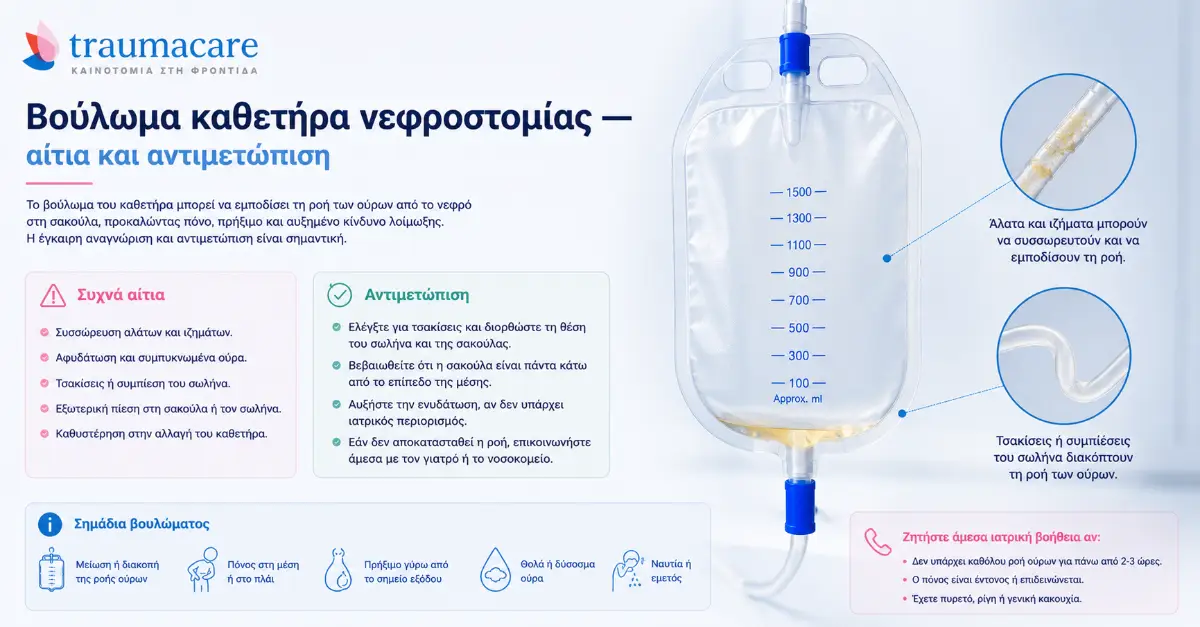
Ucpání je spolu s infekcí nejčastější komplikací nefrostomie. Vzniká, když se uvnitř katétru hromadí soli, krevní sraženiny nebo krystalické částice, které snižují nebo zcela zastavují tok moči. Podívejme se, proč k tomu dochází, jak to rozpoznat a – co je nejdůležitější – jak tomu předcházet.
Pokud nevíte, co je nefrostomie nebo celkovou péči, začněte tam.
Jak rozpoznat ucpání
- Vak zůstává téměř prázdný po dobu delší než 4 hodiny.
- Únik moči kolem místa výstupu (moč vytéká ven).
- Bolest nebo tlak v dolní části zad na straně katétru.
- Otok oblasti nad ledvinou.
- V pokročilých případech: horečka (pokud je přítomna infekce).
4 příčiny
1. Enkrustace
Nejčastější příčina. Soli vápníku a hořčíku tvoří krystaly, které se usazují na stěnách katétru. Pacienti s alkalickou močí nebo s anamnézou kamenů jsou náchylnější.
2. Krevní sraženiny
Častější v prvních dnech po zavedení nebo po poranění sliznice. Jsou perzistentnější u pacientů užívajících antikoagulancia.
3. Bakteriální biofilm
Pokud je přítomna infekce, bakterie vytvoří na vnitřní straně katétru vrstvu (biofilm), která ucpává a zároveň odolává antibiotikům.
4. Mechanické zalomení
Vzácnější příčina. Když je trubice zalomena špatnou fixací nebo náhlým pohybem, průtok se mechanicky zastaví. Obvykle se to napraví zarovnáním.
Prevence – správný režim
- Dostatečná hydratace: 1,5–2 litry vody/den. Správný průtok je nejlepším „samočištěním“.
- Strava s nízkým obsahem sodíku a zpracované potraviny.
- Infekce močových cest léčte okamžitě – alkalizace moči zvyšuje tvorbu krystalů.
- Pečlivá fixace katétru bez zalomení.
- Plánovaná výměna každých 8–12 týdnů – neodkládejte ji.
- U vysoce rizikových pacientů týdenní výplach prováděný zdravotní sestrou.
Co dělat, když k tomu dojde
První pokyn: Nepokoušejte se uvolnit blokádu násilím. Můžete poškodit katétr nebo způsobit rupturu pánve.
- Zkontrolujte, zda je vak pod úrovní ledvin (gravitace napomáhá proudění).
- Zkontrolujte, zda není trubice ohnutá nebo přehnutá.
- Pokud se to mechanicky neopraví: kontaktujte lékaře.
- V plánovaném čase se provede propláchnutí nebo výměna katétru – toto je běžné a není naléhavé, pokud není horečka.
- Pokud je horečka nebo silná bolest: okamžitě jděte na pohotovost.
Proplachování – pouze pro vyškolené pacienty
U vyškolených pacientů nebo pečovatelů může propláchnutí 5–10 ml fyziologického roztoku uvolnit začínající blokádu. Podrobnosti naleznete v našem průvodci „ Proplachování nefrostomického katétru“ (odkaz bude aktualizován s aktuální adresou URL). Pokud nejste proškoleni, nepokoušejte se o to.
Kdy provést výměnu v případě nouze
V případě přetrvávající blokády, která se nevyřeší výplachem, viditelných krust nebo opakujícího se problému lékař zařídí zavedení nového katétru – zákrok, který se provádí rychle přes vodicí drát stávajícím kanálem. Nová punkce není nutná.
Porovnání materiálů – který katétr je odolnější
Ne všechny produkty jsou si rovny:
- 100% silikonové katétry jsou odolnější vůči usazování než polyuretanové.
- Některé novější modely mají hydrogelový povlak, který snižuje mikrobiální adhezi.
- Katetry B Braun Avitum se dodávají ve specifických velikostech (8–14 Fr) s dobrou odolností.
Zeptejte se svého lékaře, jaký typ doporučuje a zda by se vyplatilo přejít na odolnější materiál.
Vztah mezi blokádou a infekcí
Jedná se o cyklický problém: infekce → alkalická moč → více solí → blokáda. A naopak: blokáda → retence moči → infekce. Včasné rozpoznání příznaků infekce (odkaz bude aktualizován po zveřejnění článku č. 10) je zásadní pro přerušení tohoto cyklu.
| ✉️ Kontaktní formulář | 💬 Viber kanál Traumacare ✓ |
| Zobrazit všechny produkty pro nefrostomii → |
Máte nějaké dotazy? Pošlete zprávu
Náš tým vám odpoví do 24 hodin. Jako výhradní zástupci společnosti B Braun Avitum vám dodáváme odolné silikonové a hydrogelové katétry s krytím EOPYY.
Kontaktní formulář
Zdroje: Perkutánní nefrostomická ošetřovatelská péče (Všeobecná nemocnice Patras), B Braun Avitum, Vládní věstník B' 5395/2025. Informativní článek, nenahrazuje lékařskou pomoc.