



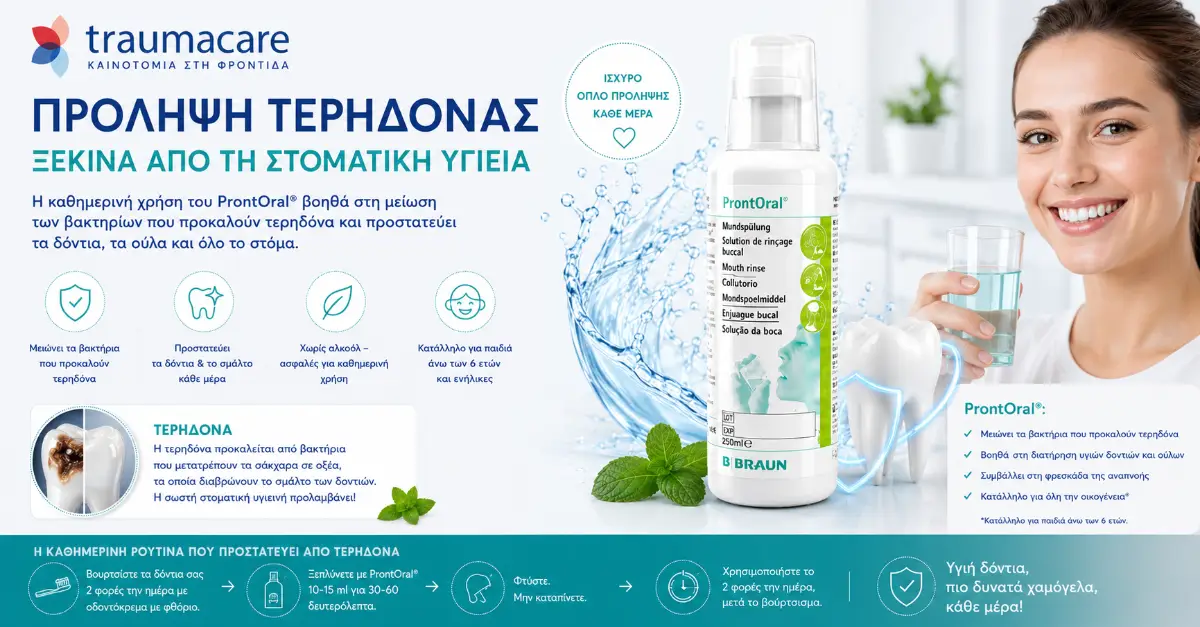
La carie dentale è una delle malattie più diffuse nell'uomo. Nonostante gli enormi progressi in campo odontoiatrico, 9 adulti su 10 soffrono di carie dentale. Nei bambini in età prescolare, l'incidenza raggiunge il 60-80% in molti paesi, tra cui la Grecia.
In questo articolo vedrete cos'è esattamente la carie dentale, perché si verifica, chi è a maggior rischio e come vengono combinati i moderni metodi di prevenzione, dal fluoro e dallo spazzolamento all'uso di soluzioni antimicrobiche con polihexanide (come ProntOral® di B|Braun), che agiscono sulla causa e non solo sull'effetto.
1. Cos'è la carie dentale
La carie dentale è una malattia infettiva multifattoriale che porta alla graduale demineralizzazione e distruzione dello smalto e della dentina. Non è qualcosa che “succede e basta” — è il risultato di uno specifico ciclo biochimico.
Il quadrilatero della carie
Perché si formi la carie, sono necessari simultaneamente 4 fattori :
- Dente vulnerabile
- Batteri patogeni (principalmente Streptococcus mutans )
- Substrato (zuccheri semplici - glucosio, saccarosio, fruttosio)
- Tempo - episodi ripetuti di acidificazione
Se si rimuove uno qualsiasi dei 4, la carie non si verifica. Qui sta la chiave della prevenzione.
2. Come si crea — meccanismo biochimico
- Streptococcus mutans aderisce al dente tramite biofilm (placca)
- Produce l'enzima glicosiltransferasi che converte il saccarosio in glucani appiccicosi
- Metabolizza il glucosio e produce acido lattico come sottoprodotto
- L'acido lattico abbassa il pH sulla superficie del dente al di sotto di 5,5
- A basso pH, l'idrossiapatite dello smalto si dissolve → demineralizzazione
- Con episodi ripetuti → cavità visibile = carie dentale
“Curva di Stephan”
Dopo ogni pasto/spuntino contenente zucchero, il pH sulla superficie del dente scende dal normale 7 a ~4,5 in pochi minuti e ritorna a 7 entro 30-60 minuti (se non si ingerisce altro zucchero). Più spesso si mangiano dolci, più a lungo i denti sono “a rischio”.
3. Fattori di rischio
Dietetici
- Frequenza del consumo di dolci > quantità
- Caramelle, lecca-lecca, pastiglie — presenza prolungata di zucchero in bocca
- Bevande zuccherate — soprattutto tra i pasti
- Bevande acide (al limone, bevande sportive) — doppio colpo
Comportamentali
- Spazzolamento inadeguato
- Mancanza di filo interdentale
- Nessuna visita dentistica > 1 anno
- Spuntino prima di dormire senza lavarsi i denti
Normale
- Bocca secca (farmaci, sindrome di Sjögren, radioterapia)
- Ortodonzia — aumentare le aree di ritenzione
- Predisposizione genetica nella composizione dello smalto
- Predisposizioni post-mortem nel microbioma
Gruppi di rischio specifici
- Bambini (smalto ancora maturo)
- Anziani (carie radicolare da xerostomia)
- Diabetici
- Pazienti sottoposti a chemio-/radioterapia (mucosite + xerostomia)
- Donne in gravidanza (pH acido da vomito, cambiamenti ormonali)
4. Prevenzione primaria - le fondamenta
Pulizia meccanica
| Voce | Frequenza | Nota |
|---|---|---|
| Spazzolatura | 2 volte al giorno × 2 minuti | Spazzolino morbido o elettrico |
| Filo interdentale | 1 volta al giorno | Prima della spazzolatura serale |
| Spazzolini interdentali | 1 volta al giorno | Nei pazienti con ampi spazi interdentali |
| Pulizia della lingua raschiando | 1 volta al giorno | Con un raschietto |
Fluoro
- Dentifricio al fluoro 1450 ppm (adulti) o 1000 ppm (bambini)
- Risciacquare con poca acqua dopo aver lavato i denti o non farlo affatto ("sputa, non risciacquare")
- Applicazione professionale di fluoro (vernice) 2 volte all'anno in caso di alto rischio
Interventi dietetici
- Riduzione frequenza di snack zuccherati
- Sostituzione con xilitolo (gomma da masticare) - ha un effetto anti-carie
- Acqua tra i pasti invece di succhi
- Niente snack prima ora di andare a letto
5. Prevenzione secondaria - approccio antimicrobico
Oltre all'approccio meccanico, nei pazienti ad alto rischio la terapia antimicrobica si rivolge direttamente a S. mutans e al biofilm.
Perché la clorexidina non è una soluzione a lungo termine
La clorexidina allo 0,12-0,2% riduce significativamente gli streptococchi, ma:
- Non è raccomandata per più di 14 giorni (macchia sui denti)
- Non combinata con il dentifricio al fluoro (neutralizzazione)
- Spesso causa disgeusia
Perché ProntOral® (polihexanide) è adatto
Il polihexanide (PHMB) di ProntOral®:
- Agisce contro S. mutans e altri streptococchi orali
- Può essere Utilizzato a lungo termine senza macchiare i denti
- Non interagisce con il fluoro — completa l'azione del dentifricio
- Senza alcol — adatto a pazienti con secchezza delle fauci
- Gusto menta piperita — mantiene la compliance
Protocollo d'uso per la prevenzione della carie
| Condizione del paziente | Dose | Frequenza | Durata |
|---|---|---|---|
| Basso rischio, uso quotidiano | 10 ml | 1× sera | Continuo |
| Alto rischio | 10 ml | 2× al giorno | Continuo |
| Carie multiple recenti | 10 ml | 2× | 3 mesi, valutazione |
| Paziente ortodontico | 10 ml | 2× | Tutta la durata |
| Bocca secca | 10 ml | 2× + idratazione | Continuamente |
| Bambini > 4 anni di età ad alto rischio | 5 ml | 1× sera | Sotto controllo medico |
| Donne in gravidanza | 10 ml | 1× | Su raccomandazione medica |
6. Situazioni cliniche particolari
Bambini
Nei bambini, la carie nei denti da latte ("carie da biberon") è dovuta principalmente alla frequente esposizione a bevande/biberon zuccherati durante la notte. Prevenzione:
- Niente biberon con bevande zuccherate di notte
- Pulizia dei denti con garza/spazzolino dai 6 mesi
- Visita dal dentista dal 1° anno
- Vernice al fluoro 2 volte/anno
- Dai 4 anni: ProntOral® 5 ml 1 volta la sera nei bambini ad alto rischio
Pazienti sottoposti a radioterapia della testa e del collo
Le radiazioni causano grave secchezza delle fauci e carie da radiazioni — un attacco alla radice del dente. Prevenzione:
- Pulizia professionale prima della radioterapia
- Mascherine al fluoro giornaliere
- ProntOral® 4 volte al giorno durante tutto il trattamento
Anziani
La carie radicolare è comune a causa dei canali radicolari ipersalivati dalla recessione gengivale. Raccomandiamo:
- ProntOral® giornaliero su una spugna/spazzolino
- Dentifricio ad alto contenuto di fluoro (5000 ppm)
- Visita dal dentista 3-4 volte all'anno
7. Quando visitare il dentista
- Sistematicamente: Pulizia 2 volte all'anno
- Immediatamente: Se vedi macchie scure, senti sensibilità al caldo/freddo o senti "grattarti" con la lingua
8. Cosa NON previene la carie
- "Buona "ereditarietà" (genetica) - non elimina il rischio
- Succhi di frutta naturali (spesso acidi come le bibite gassate)
- Caramelle al miele/zucchero di canna ("naturali" - ma altrettanto cariogene)
- Soluzioni a base di solo alcol senza fluoro/PHMB
- Lavarsi i denti dopo un pasto acido (erode lo smalto già morbido - attendere 30 minuti)
${{products:190}}
Editore e redattore
Redattore: Traumacare Medical Group - distributore esclusivo B|Braun in Grecia.
Ultimo aggiornamento: Maggio 2026 · Disclaimer: Articolo informativo, non sostituisce il parere medico.
Contatta il team medico di Traumacare
Hai domande su ProntOral®?
Consulenza gratuita per l'uso in un paziente, in terapia intensiva, in una casa di cura o in preparazione chirurgica.
| ✉️ Modulo di contatto | 💬 Viber Traumacare ✓ |
📞 Telefono: 2311 286262
Modulo di contatto
L'intero cluster ProntOral®
- #00 — ProntOral®: guida utente completa
- #01 — Polihexanide (PHMB) nella decolonizzazione orale
- #02 — Pacchetto di decolonizzazione MDRO pre-chirurgica
- #03 — Prevenzione della VAP in terapia intensiva
- #04 — Mucosite nei pazienti oncologici
- #05 — ProntOral® nell'assistenza domiciliare
- #06 — ProntOral® contro clorexidina
- #07 — Dalla profilassi dentale all'infezione acquisita in ospedale
- #08 — Placca dentale
- #09 — Cervicale cancro
- #10 — Gengivite
- #11 — Parodontite
- #12 — Mughetto orale
- #13 — ProntOral® vs Curasept
- #14 — ProntOral® vs Elgydium & Hexoral