



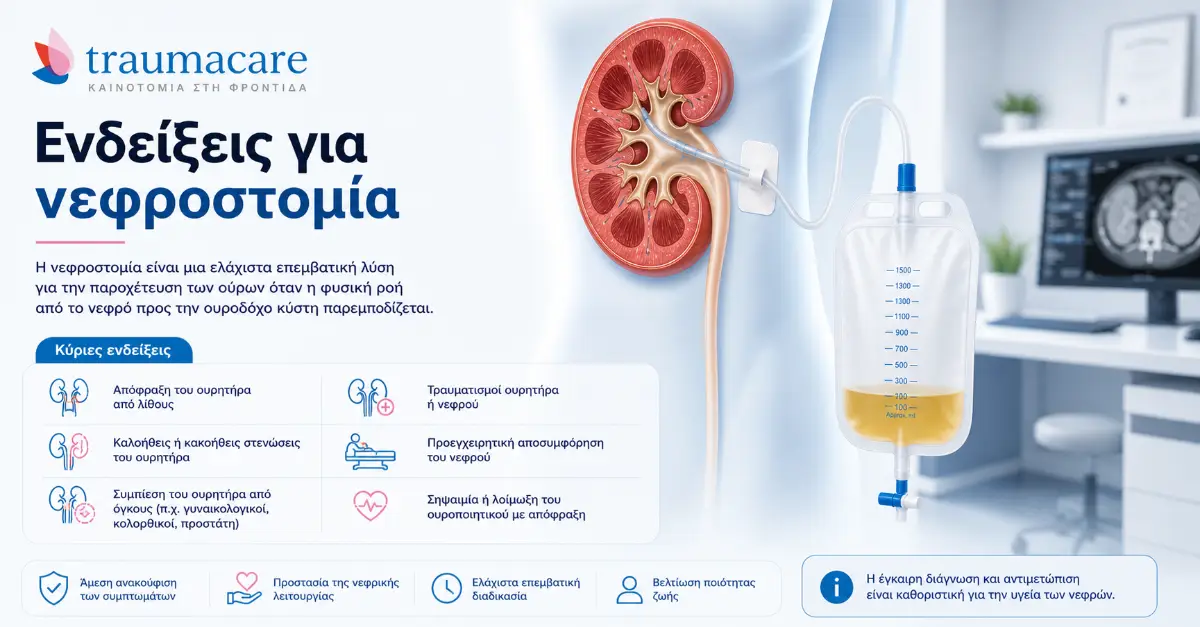
Nephrostomy is not a first-line treatment but a solution when the normal urinary tract is not functioning. Below we present the main indications and how each case is evaluated by the urologist or interventional radiologist.
If you want general information about what a nephrostomy is, first read the complete care guide .
1. Ureteral or pelvic stones
A large stone (usually > 10 mm) lodged in the ureter can cause total obstruction and hydronephrosis . When fever or sepsis is present, nephrostomy is performed urgently—it precedes any other intervention for the stone.
2. Tumors compressing the ureter
Ureteral, bladder, prostate, or gynecologic tumors (especially advanced cervical cancer) may externally compress the ureter. Nephrostomy ensures kidney function while oncologic treatment is being performed.
3. Ureteral injury
In gynecologic, orthopedic, or vascular procedures, there is a rare but real possibility of inadvertent ureteral incision or ligation. Nephrostomy decompresses the kidney until definitive repair.
4. Acute obstructive pyelonephritis with sepsis
This is perhaps the most urgent indication . When an obstructed kidney becomes infected, sepsis develops rapidly—a life-threatening condition. Nephrostomy is placed within hours, and drainage of purulent urine confirms the diagnosis.
5. Ureteral stricture
Strictures develop postoperatively (e.g., after stent placement) or after radiotherapy. When not treated endoscopically, permanent nephrostomy is a maintenance option.
6. Inability to place a ureteral stent
If it is technically impossible to place a double-J stent (e.g. due to total obstruction that cannot be penetrated), nephrostomy provides the solution from the “upper” side. See detailed comparison: Nephrostomy or ureteral stent? (will be activated after the publication of article #4).
7. Diagnostic and therapeutic needs
In some cases, nephrostomy is placed for diagnostic purposes (antiencephalic pyelography) or as a route for administering drugs or lavages (e.g. in infection or bleeding).
How the doctor decides
In each case, the decision depends on the following:
- The severity and severity of the obstruction
- The presence or absence of infection
- The expected duration of the need for drainage
- The choice of the patient
- The availability of technical infrastructure (interventional radiology laboratory)
In specialized centers, the collaboration of a urologist and an interventional radiologist ensures the optimal choice. In some cases, the doctor may start with a nephrostomy (emergency) and later convert to a ureteral stent or a more permanent solution.
| ✉️ Contact form | 💬 Viber channel Traumacare ✓ |
| See all nephrostomy products → |
Do you have any questions? Send a message
Our team will answer you within 24 hours. We are exclusive B Braun Avitum representatives and Convatec distributor, with EOPYY contract since 2014.
Contact form
Sources: Government Gazette B' 5395/09-10-2025, Hellenic Society of Interventional Radiology. Informational article, not a substitute for medical advice.