



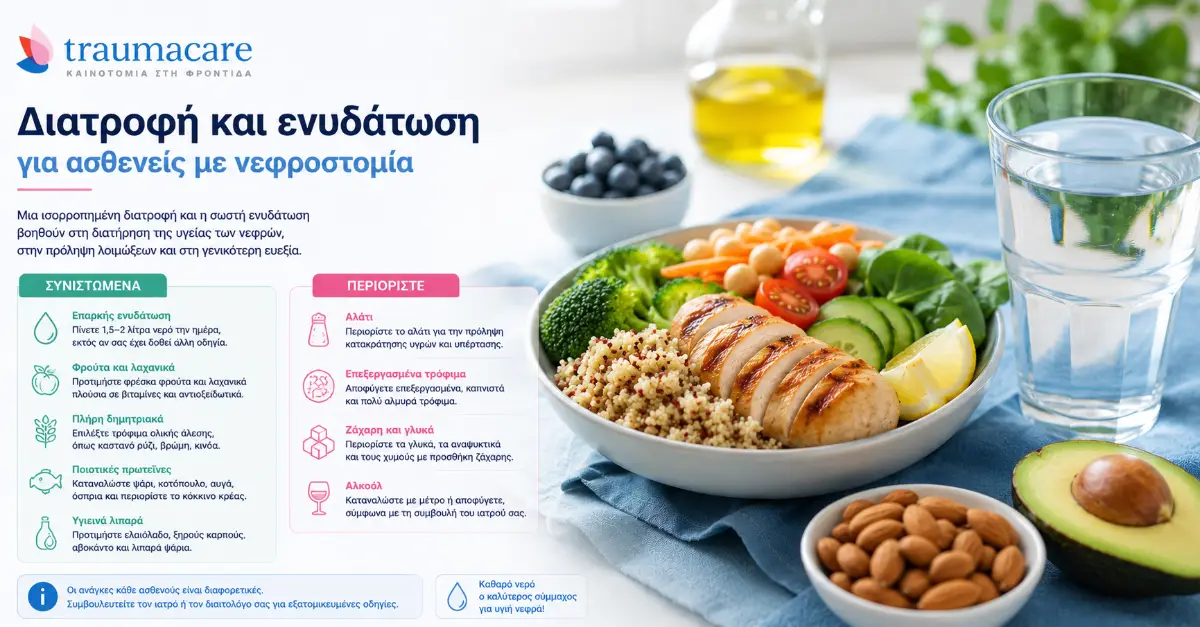
Nutrition is the nephrostomy patient's most underrated ally . Proper hydration and a balanced diet reduce the risk of blockage, infection, and deterioration of kidney function — without dramatically cutting back on your enjoyment of food.
If you don't know what a nephrostomy is or what it's like to care for it, start there.
Water: The No. 1 Factor
Adequate fluid intake is the most important piece of advice. Aim for 1.5-2 liters of water daily (unless your doctor has prescribed otherwise due to heart or kidney failure). More water means more diluted urine — fewer salts, fewer germs, less blockage.
Practical: a glass of water every 1-2 hours during the day. A 1 liter bottle always with you as a reminder.
Diet that helps
Fruits and vegetables
Rich in water and potassium. Watermelon, cucumber, tomato, citrus fruits, strawberries, apples. They help to hydrate and maintain an acidic urine pH (repels some germs).
Cranberry tea
Has a modest but documented effect on reducing urinary tract infections. 250 ml per day is sufficient. Caution in patients taking anticoagulants (interaction with warfarin).
Whole grains
A steady source of fiber, they reduce constipation (which can increase intra-abdominal pressure and worsen leaks).
Diet to reduce blockage
The accumulation of salts within the catheter is the most common cause of blockage. Some dietary approaches help:
- Reducing salt (sodium) intake to 5-6 g/day.
- Do not take too much calcium from supplements (dietary consumption is safe).
- Avoid excessive animal protein intake — they increase acidity and uric acid production.
- Less sugar and processed foods.
What to watch out for
Caffeine and alcohol
They have a diuretic effect — theoretically they increase urine production but dehydrate the body. The recommendation: moderate coffee consumption (1-2 cups) and minimal alcohol. Don't forget to replenish with water.
Carbonated drinks
They have sugar and phosphoric acids. Best avoided.
Special cases
Patients with chronic kidney disease
In these patients, the general recommendations are modified by the nephrologist: protein, potassium or phosphorus intake is often reduced. The doctor is the only one who should prescribe the individualized diet.
Patients undergoing chemotherapy
In oncology patients with nephrostomy due to cancer, the diet is adjusted by the oncologist and dietitian. More calories and protein are often needed.
Diabetic patients
Blood sugar control is critical — high blood sugar increases the risk of urinary tract infection. Continue your usual diabetes diet with hydration supplements.
One-line recommendations
Water frequently, salt sparingly, fruits and vegetables daily, alcohol sparingly — and always consult with your doctor for individualization.
Danger signs of poor nutrition
- Dark or cloudy urine → indication of dehydration
- More frequent blockage or catheter flushing → possibly increased salts
- Constipation → low fluid or fiber intake
- Decreased energy → possibly insufficient protein intake
| ✉️ Contact form | 💬 Viber channel Traumacare ✓ |
| See all nephrostomy products → |
Do you have any questions? Send a message
Our team will respond within 24 hours. As exclusive B Braun Avitum representatives, we supply you with the appropriate care materials with EOPYY coverage.
Contact form
Sources: Hellenic Nephrological Society, General Hospital of Patras, Government Gazette B' 5395/2025. Informative article, does not replace medical advice.