



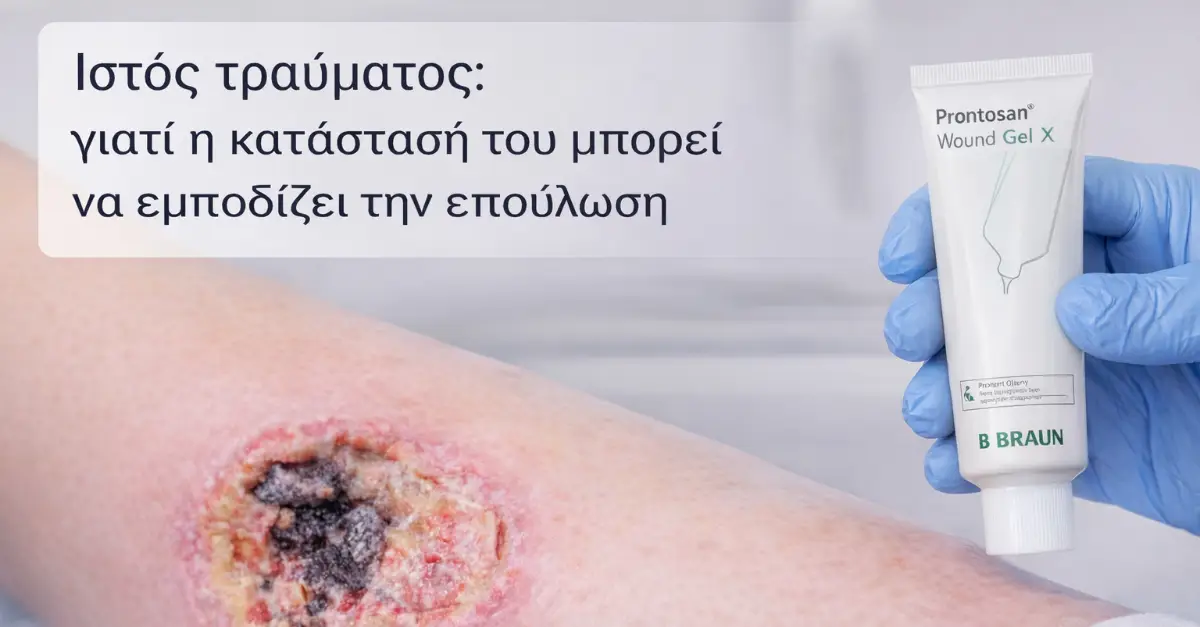
Even when a wound has been cleansed and monitored regularly, healing can be delayed. One of the most common reasons is the condition of the tissue within the wound.
In modern wound care, tissue assessment is the first element of the TIME framework, as nonviable or burdened tissue can hinder any attempt at healing.
What is meant by “wound tissue”
Wound tissue refers to the material covering the base of the wound. Depending on its appearance, it can be:
- healthy and granulated ,
- necrotic ,
- fibrous or congested ,
- or a combination of the above.
The presence of non-viable tissue makes healing difficult and increases the risk of complications.
When does tissue become an obstacle to healing
Tissue can impede healing when:
- covers the wound bed and prevents regeneration,
- retains microorganisms and aggravating factors,
- makes effective care difficult,
- is associated with increased inflammation or unbalanced moisture.
In these cases, even properly selected materials may not be effective if the burdened tissue is not treated first.
The importance of removing non-viable tissue
According to international wound care practices, the removal of non-viable tissue is a key step to:
- reduce aggravating factors,
- improve the appearance of the wound,
- and create conditions that are conducive to healing.
This process is not the same for all wounds and should always be done under the guidance of a health professional.
The role of proper care in the tissue stage
At this stage, care focuses on:
- gentle and proper cleansing,
- supporting the removal of burdened tissue (where appropriate),
- and creating appropriate conditions in the wound.
The selection of materials is made depending on the image and needs of the wound and not according to general rules.
Indicative products used in the tissue stage
The following are indicated as an indication and their selection is always made in collaboration with a healthcare professional.
-
Prontosan® Wound Irrigation Solution
Supports wound cleansing and the removal of aggravating factors, as part of tissue preparation and care.
Note: Use of products is in accordance with the instructions for use and clinical guidance. The above does not constitute a therapeutic promise.
When to re-evaluate
The appearance of the tissue may change. Re-evaluation is required when:
- worsening of the appearance of the wound,
- increased discharge,
- change in color or odor,
- or delay without apparent reason.
In these cases, guidance from a healthcare professional is necessary.
How the tissue stage is linked to the next steps
Proper tissue management:
- reduces the risk of inflammation,
- facilitates moisture regulation,
- and prepares the wound for the next stages of the TIME framework
What comes next
The next article in the series will analyze inflammation and microbial burden (I – Infection / Inflammation) and how they directly affect the healing process.
This article is based on internationally recognized trauma care practices and is for informational purposes only. It is not a substitute for medical or nursing evaluation.
Edited by: Traumacare Team