



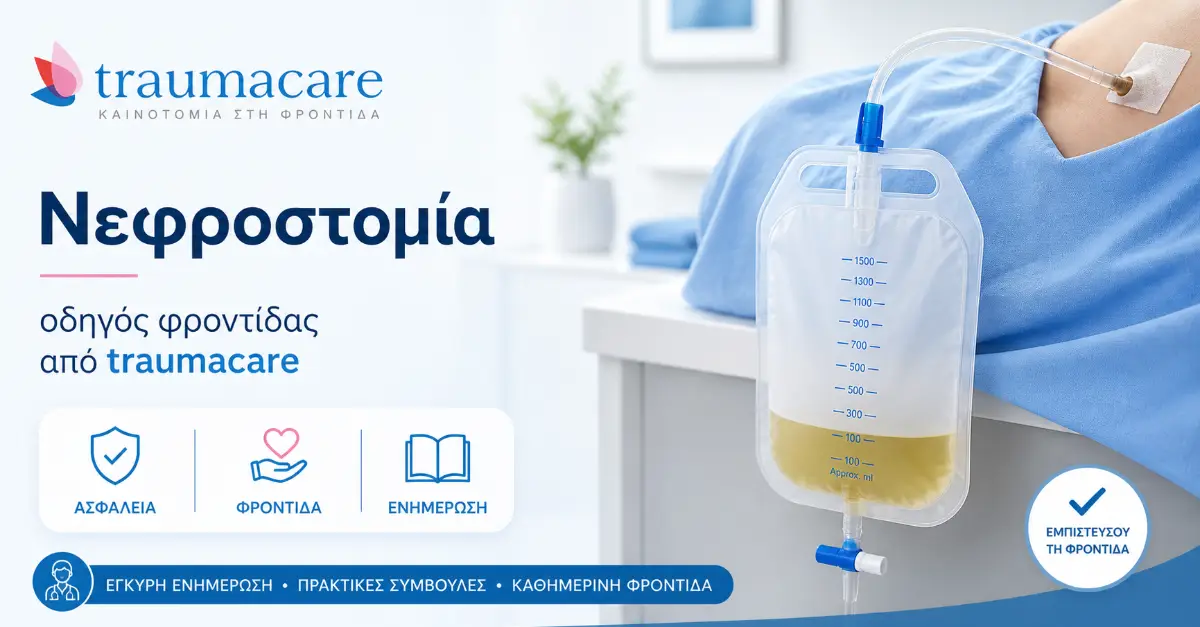
Діагноз, який призводить до нефростомії, зазвичай ставиться несподівано. Незалежно від того, чи це екстрене втручання для полегшення блокованої нирки, чи довгострокове рішення, коли нормальний сечовивідний шлях неможливий, нефростомія змінює багато речей у повсякденному житті, але менше, ніж можна було б очікувати.
У цьому посібнику ви знайдете все, що вам потрібно знати: що саме таке нефростомія, які її показання, як її встановлюють і, найголовніше, як правильно доглядати за трубкою та мішком вдома. Ми також розглянемо, що покриває EOPYY, які можливі ускладнення та коли слід звернутися до лікаря.
Важливо: Ця стаття призначена лише для ознайомлення. Вона не замінює пораду вашого лікаря чи медсестри. Якщо у вас виникли симптоми або запитання, зверніться до лікаря.
Що таке нефростомія
Нефростомія — або, точніше перкутанна нефростомія (ПЧН) — це медична процедура, під час якої тонка трубка (катетер) вводиться через шкіру в ниркову миску. Її метою є відведення сечі безпосередньо з нирки в зовнішній мішок для збору, коли нормальний шлях через сечовід і сечовий міхур заблокований або з якоїсь причини не може бути використаний.
Катетер виготовлений з біосумісного матеріалу (зазвичай поліуретану або силікону) і має спіральний кінець («косичку») всередині нирки, який стабілізує її. Зовні він з’єднаний із системою збору сечі — мішком, який може бути портативним (мішок для ніг) або стаціонарним (нічний мішок).
Нефростомія може бути тимчасовою (від кількох днів до кількох тижнів), поки лікується причина обструкції, або постійною, коли причина не є оборотною. У цьому випадку катетер змінюють кожні 8-12 тижнів, щоб запобігти накопиченню солей та закупоркам.
Коли потрібна нефростомія
Нефростому встановлюють, коли є закупорка в сечоводі або нирковій мисці, яка перешкоджає нормальному відтоку сечі до сечового міхура. Якщо накопичення продовжується, нирка набрякає (гідронефроз) і — якщо її не декомпресувати негайно — може бути незворотно пошкоджена.
Основні показання
- Камені сечоводу або тазу, що спричиняють повну обструкцію та гідронефроз.
- Пухлини (сечоводу, сечового міхура, тазу, передміхурової залози або гінекологічні пухлини), що зовні стискають сечовід.
- Травма або випадкове пошкодження сечоводу під час операції.
- Гострий пієлонефрит із сепсисом, що потребує негайного дренування.
- Стриктури сечоводу після операції або опромінення.
- Коли сечоводний стент (подвійний J) не може бути встановлений або він не спрацював.
Як це робиться
Процедуру виконує інтервенційний рентгенолог або уролог у спеціальній радіологічній або хірургічній палаті. Вона є малоінвазивною: пацієнту зазвичай не потрібна загальна анестезія, а місцева з легкою седацією або без неї, а загальна тривалість становить близько 30-60 хвилин.
Етапи процедури
- Пацієнта кладуть на живіт або трохи на бік.
- Поперекову область очищають антисептиком та застосовують місцеву анестезію.
- Нирку проколюють за допомогою ультразвуку та/або флюороскопії.
- У таз вводиться тонкий дріт-направляючий пристрій, а над ним розміщується останній катетер.
- Катетер фіксується швом до шкіри та бинтами.
- Відтік сечі починається негайно.
Після процедури пацієнт зазвичай залишається в лікарні протягом 24 годин для спостереження. Він може відчувати легкий біль у поперековій ділянці та помічати гематурію (кров у сечі) протягом 24-48 годин — це поширене явище, яке проходить. Він повертається додому, коли його сеча прозора, і його навчили доглядати за сечоводним мішком.
Нефростомія чи сечоводний стент?
Це два різні підходи до однієї й тієї ж проблеми — дренування нирок. Нефростомія відводить сечу назовні, тоді як стент (подвійний J-подібний) відводить її всередину до сечового міхура. Який варіант підійде, залежить від конкретного випадку.
Переваги нефростомії
- Негайна та гарантована декомпресія — не залежить від прохідності сечоводу.
- Можливість контролювати об'єм/колір сечі з кожної нирки окремо.
- Можливість вводити ліки або промивання безпосередньо в нирку.
Переваги стентів
- Не видно зовні — не впливає на сприйняття тіла.
- Пацієнт не потребує щоденного догляду.
- Дозволяє більше вільної діяльності (плавання, фізичні вправи тощо).
На практиці ваш лікар обиратиме катетером на основі причини закупорки, стану пацієнта, очікуваної тривалості лікування та того, чи технічно можливе встановлення стента.
Щоденний догляд — що робити вдома
Правильний догляд за катетером та мішком — єдиний фактор, який ви можете контролювати. Систематична гігієна значно знижує ризик інфекції та закупорки, які є двома найпоширенішими ускладненнями.
Спорожнення мішка
Мішок для ноги слід спорожняти, коли він заповнений на 2/3, щоб він не обтяжував і не тягнув катетер. За нормальних умов це означає 3-5 разів на день. Перед спорожненням вимийте руки з милом, відкрийте зливний клапан у чистий туалет або спеціальний контейнер і знову закрийте його, не торкаючись кінчика.
Заміна пакета
Пакет замінюють кожні 5-7 днів або частіше, якщо він протікає, має запах або каламутний. Завжди використовуйте асептичну техніку: рукавички, очистіть з'єднання спиртовим тампоном і викиньте старий пакет у контейнер для медичних відходів (або в пакет з подвійним герметиком, якщо його немає).
Догляд за місцем виходу
Місце, де трубка входить у шкіру, називається «місцем виходу» і його потрібно перевіряти щодня. Використовуйте стерильну марлю та антисептик (наприклад, 2% хлоргексидин) для очищення навколо трубки круговими рухами зсередини назовні. Потім накладіть нову марлю та водонепроникну пов'язку. Сучасні прозорі плівкові пов'язки з хлоргексидином можна залишати на місці до 7 днів, що значно зменшує кількість змін пов'язок.
Стабілізація
Поширеною помилкою є нещільне звисання трубки. Її слід закріпити на шкірі спеціальним клеєм (наприклад, StatLock) або стрічкою, щоб запобігти її витягуванню різкими рухами. Різке висмикування може призвести до зміщення катетера — це надзвичайна ситуація, що вимагає негайного повернення до лікарні.
Спосіб життя з нефростомою
Купання та душ
Прийняття душу дозволено, коли місце виходу добре покрите водонепроникною прозорою плівковою пов'язкою. Уникайте купання у ванні, плавання в басейні або морі, а також відвідування спа/сауни протягом перших 6 тижнів, і завжди після консультації з лікарем.
Подорожі
Пацієнти з фіксованою нефростомою можуть подорожувати, навіть літаком. Потрібна підготовка: кілька змінних пакетів, антисептики, марля, ножиці (ми перевіряємо правила перевезення багажу) та медична довідка англійською мовою.
Харчування та рідини
Правильна гідратація (1,5-2 літри води щодня, якщо лікар не призначив інше) є найбазовішим «природним промиванням» катетера. Дієта, корисна для нирок (контрольований вміст натрію, помірне споживання білка), уповільнює накопичення солей, які можуть закупорити трубку.
Фізичні вправи та активність
Легка ходьба та прості щоденні дії дозволені з другого дня. Уникайте важких фізичних навантажень, підняття ваги понад 5 кг та контактних видів спорту протягом 4–6 тижнів. Поступово повертайтеся до всіх видів діяльності, крім плавання в громадському басейні з трубкою.
Можливі ускладнення — і коли звертатися до лікаря
За належного догляду серйозні ускладнення трапляються рідко. Однак раннє розпізнавання ранніх ознак є критично важливим.
Інфекція
Ознаки, на які слід звернути увагу: лихоманка > 38°C, озноб, біль у спині, каламутна або з неприємним запахом сеча, почервоніння/гній у місці виходу. Інфекція сечовивідних шляхів з нефростомією може швидко прогресувати до сепсису — негайно зверніться за медичною допомогою.
Закупорка
Якщо ви помітили, що мішок не наповнюється більше 4 годин або що рідина починає витікати з місця виходу, трубка, ймовірно, засмічена солями або кров'яними кірками. Не намагайтеся промивати її самостійно, якщо ви не навчені.
Випадкове видалення
Якщо трубка виходить частково або повністю, обгорніть її стерильною марлею та негайно зверніться до відділення невідкладної допомоги. Протягом кількох годин тракт закриється і його потрібно буде вставити знову.
Витік сечі на шкірі
Можуть виникати невеликі витоки навколо місця виходу. Великі або постійні витоки свідчать про закупорку або зміщення катетера — необхідна консультація лікаря.
Покриття EOPYY — на що ви маєте право
Пацієнти з нефростомією покриваються Єдиним регламентом про медичні виплати EOPYY (EKPY) за кодами МКХ-10 Z93.6 (наявність штучної сечової стоми) та Z43.6 (догляд за штучною сечовою стомою). Згідно з Урядовим вісником B' 5395/09-10-2025, EOPYY покриває систему з 1 або 2 частин з максимальною щомісячною вартістю 270 євро та участю пацієнта 0%.
Рецепти виписуються в електронному вигляді лікарем через електронні послуги EOPYY. Наступні особи мають право виписувати рецепти: терапевт, нефролог, хірург, дитячий хірург, терапевт, уролог, онколог та сільський лікар.
Як контрактний постачальник EOPYY з 2014 року, Traumacare бере на себе всю документацію: ви отримуєте рецепт від лікаря, надсилаєте його нам в електронному вигляді, а матеріали надсилаються вам додому експрес-кур'єром наступного дня.
Часті запитання
Як довго служить катетер нефростоми, перш ніж його потрібно буде замінити?
Сучасні поліуретанові або силіконові катетери зазвичай замінюються кожні 8-12 тижнів. У разі ускладнень (закупорка, інфекція) заміна проводиться раніше.
Чи боляче замінювати катетер?
Заміна провідника є відносно безболісною та займає 10-15 хвилин під місцевою анестезією.
Чи можу я подорожувати літаком?
Так. Візьміть із собою медичну довідку англійською мовою, кілька запасних сумок та повідомте про це перевірку безпеки перед скануванням.
Чи покривається це EOPYY?
Так, повністю на основні матеріали (сумки, основи, пасти, антисептики). Участь пацієнта 0%, максимальна вартість 270 євро/місяць.
Чи можна плавати в морі?
Не під час носіння нефростоми. Ризик зараження від неперевіреної води високий. Приймати душ з водонепроникною пов'язкою безпечно.
Купуйте всі матеріали для нефростоми у постачальника, з яким укладено контракт з EOPYY
Traumacare є ексклюзивним представником B Braun Avitum у Греції та дистриб'ютором продукції Convatec — компанії з багаторічним досвідом у догляді за нефростомами та уростомами. Ми пропонуємо широкий асортимент матеріалів зі 100% покриттям EOPYY та доставкою по всій Греції. Наша команда з понад 20-річним досвідом допоможе вам у виборі та подбає про призначення препарату.
| ✉️ Контактна форма | 💬 Канал Viber Traumacare ✓ |
| Переглянути всі вироби для нефростомії → |
У вас є якісь питання? Надішліть повідомлення
Заповніть форму, і ми відповімо протягом 24 годин. Наша команда допоможе вам перевірити ваш договір з EOPYY, вибрати відповідні матеріали B Braun Avitum або Convatec та організувати доставку додому.
Контактна форма
Джерела: Урядовий вісник B' 5395/09-10-2025, Єдине регулювання медичних виплат EOPYY, Догляд за пацієнтом з перкутанною нефростомією (Загальна лікарня Патрас). Стаття є інформативною та не замінює медичну консультацію. Останнє оновлення: травень 2026 р.