



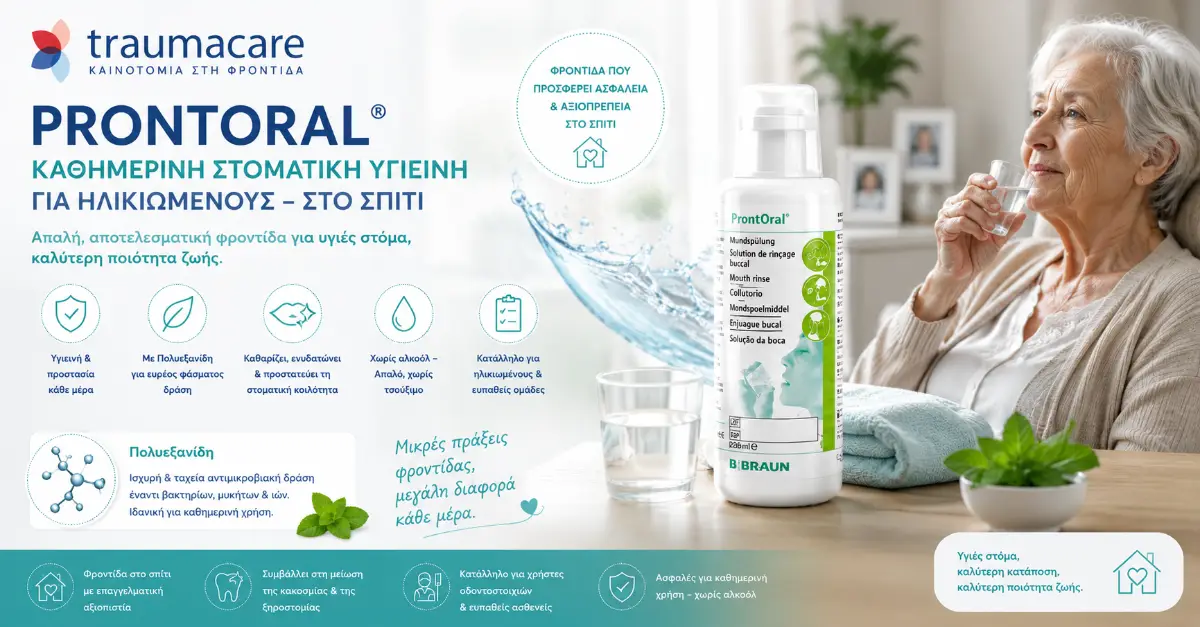
Гігієна порожнини рота у людей похилого віку, особливо у тих, хто має хронічні проблеми з рухливістю або когнітивні порушення, є одним із найбільш занедбаних аспектів щоденного догляду. Хоча пацієнти похилого віку поступово втрачають самостійність, здоров'я їхньої порожнини продовжує бути безпосередньо пов'язаним із загальним станом: воно впливає на харчування, соціальні контакти та навіть ризик госпіталізації з приводу пневмонії.
У цій статті ми представляємо практичний посібник із правильного використання ProntOral® вдома для пацієнтів похилого віку з різними потребами — від активних пенсіонерів до лежачих пацієнтів. Стаття в першу чергу адресована сім'ям та опікунам, яким потрібні прості, зрозумілі та безпечні інструкції.
Примітка Traumacare: Ми є ексклюзивним дистриб'ютором B|Braun у Греції. ProntOral® доступний з доставкою додому по всій країні.
1. Чому гігієна порожнини рота є критично важливою для людей похилого віку
З віком та нерухомістю в роті відбувається кілька паралельних змін:
- Зниження вироблення слини (часто через прийом ліків: антигіпертензивних, діуретичних, антидепресантів)
- Утруднення чищення зубів через артрит, слабкість або когнітивне зниження
- Зміна флори порожнини рота у бік більш агресивних патогенів
- Утворення біоплівки на зубах та протезах
- Більш крихка слизова оболонка, вразлива до афт та травм
- Частіший неприємний запах з рота, що впливає на соціальні контакти
Все це призводить до:
- Підвищеного ризику респіраторних інфекцій: ротова флора є основним джерелом бактеріальної пневмонії у людей похилого віку з обмеженою рухливістю
- Частішого гінгівіту та пародонтиту з місцевим болем та дисфагією
- Зниження споживання калорій через біль або втрату смаку
- Складнощі з адаптацією зубних протезів
2. Чому ProntOral® підходить для домашнього використання
На відміну від звичайних ополіскувачів для рота, що продаються в супермаркетах:
| Характеристика | Користь для людей похилого віку |
|---|---|
| Без спирту | Не пересушує вже сухий рот |
| Без хлоргексидину | Не залишає плям на зубах або зубних протезах |
| Не взаємодіє з фтором | Сумісний зі звичайними зубними пастами |
| М'ятний смак, м'який | Не викликає печіння на чутливій шкірі слизова оболонка |
| Не потребує промивання | Просте використання, менше кроків |
| Дія проти мультирезистентних респіраторних захворювань | Важливо для госпіталізованих/виписаних пацієнтів |
| Лікує виразки на шкірному виразці | Поширений у людей похилого віку |
| Лікує неприємний запах з рота | Покращує соціальні контакти та впевненість у собі |
| Хороший профіль безпеки | Нетоксичний при випадковому проковтуванні в невеликих кількостях |
| Запобігає утворенню зубного нальоту, карієсу, гінгівіту | Зберігає здоров'я ротової порожнини в довгостроковій перспективі |
3. Коли ProntOral® підходить для домашнього використання
Сценарій A: Активні люди похилого віку (60-75 років)
Щоденне використання: 1× на день після вечірнього чищення зубів. Профілактика зубного нальоту, гінгівіту, неприємного запаху з рота.
Сценарій B: Люди похилого віку з обмеженою рухливістю
Щоденне використання: 2× на день. Внесок у загальну гігієну, коли ефективне чищення зубів утруднене.
Сценарій C: Літні люди після госпіталізації
Тимчасове використання 7-10 днів: 2-3 рази на день. Значний захист від MDRO, які могли бути колонізовані в лікарні.
Сценарій D: Ліжковий пацієнт
Щоденне використання: 2-3 рази на день опікуном. Це критично важливе втручання для профілактики респіраторних інфекцій.
Сценарій E: Пацієнт з деменцією
Щоденне використання: 2 рази на день опікуном за допомогою ватного тампона або губки. Співпраця пацієнта не потрібна.
Сценарій F: Літня людина з частими афтами
Цільове застосування: 3-4 рази на день до зникнення. Додатково, місцеве застосування на виразки за допомогою тампона.
Сценарій G: Літня людина з галітозом
Щоденне застосування: спочатку 2 рази на день протягом 2 тижнів. Потім підтримуюча терапія 1 раз на день.
4. Як застосовувати ProntOral® літній людині, яка не може самостійно полоскати рот
Це найпоширеніше запитання, яке ми отримуємо від осіб, що доглядають за нею. Нижче наведено кроки:
Матеріали
- ProntOral® 250 мл
- Губка або великий ватний тампон (типу Янкауера)
- Рушник
- Одноразовий стаканчик (15-20 мл)
- Рукавички
Кроки
- Підготовка положення пацієнта: Розмістіть пацієнта в напівсидячому положенні (45°), не лежачи. Якщо пацієнт прикутий до ліжка, підніміть ліжко.
- Захист одягу: Рушник навколо шиї.
- Очищення ватним тампоном: Занурте губку в ProntOral® (або налийте на неї трохи розчину). Очистіть:
- Зуби (з усіх боків)
- Ясна
- Внутрішню поверхню щік
- Язик (ззаду вперед)
- М’яке піднебіння
- Часто міняйте губку, якщо вона дуже брудна.
- Протріть сухою губкою або марлею, змивання не потрібне.
- Зволожте губи вазеліном або маслом какао.
Тривалість
Весь процес займає 3-5 хвилин. В рамках щоденного догляду це можна робити після сніданку та перед сном.
Для пацієнтів із зубними протезами
- Зніміть зубні протези
- Очистіть зубні протези окремо (м’яка щітка + вода)
- Нанесіть ProntOral® на ротову порожнину, як зазначено вище
- Перед повторним встановленням зубних протезів залиште на 2-3 хвилини
- Зубні протези також можна замочувати в ProntOral® на 10 хвилин один раз на тиждень
5. Перевірка порожнини рота: на що звертати увагу щодня
Уважний доглядач може виявити проблеми на ранній стадії. Щодня перевіряйте наявність:
- Колір ясен: зазвичай рожевий, варто занепокоєння, якщо яскраво-червоний або чорний
- Білі нальоти: можуть бути кандидозом — якщо вони не зникають після чищення зубів, зверніться до лікаря
- Виразки на яснах: маленькі жовто-білі виразки — зазвичай проходять самостійно
- Кровоточивість ясен: ознака гінгівіту або більш серйозної проблеми
- Неприємний запах з рота: може свідчити про інфекцію, сухість у роті або затримку їжі
- Біль під час їжі: можливий карієс або біль
- Розхитаність зубів зубні протези: потребує зміни положення стоматологом
6. Коли звернутися до лікаря/стоматолога
Хоча ProntOral® самостійно лікує багато проблем, у деяких випадках потрібна негайна професійна оцінка:
- Сильний біль, який не минає протягом 2-3 днів
- Лихоманка у поєднанні з симптомами у ротовій порожнині
- Кровотеча, яка не зупиняється
- Утруднене дихання або ковтання
- Білі нальоти, що швидко поширюються
- Афти, що тривають > 10 днів або є дуже великими
- Набряклі ясна з гноєм
⚕️ Показання, протипоказання та безпека домашнього догляду
Хто отримує найбільшу користь
- Люди похилого віку > 65 років зі зниженою здатністю до гігієни порожнини рота
- Ліжачі пацієнти (підвищений ризик аспіраційної пневмонії)
- Люди з деменцією/хворобою Альцгеймера
- Пацієнти з дисфагією після інсульту
- Люди похилого віку після госпіталізації (профілактика МДРО) переведення додому)
- Люди з сухістю в роті через поліпрагмазію
- Носителі зубних протезів
Коли не використовувати
- Відома алергія на аналогічну групу ополіскувачів для рота
- Тяжка дисфагія без можливості смоктати або спльовувати → перевага надається просоченим губкам, а доглядач повинен відсмоктувати їх
- Діти до 4 років, які можуть проживати вдома (завжди тримайтеся подалі)
Побічні ефекти — на що повинен звертати увагу доглядач
У літніх пацієнтів більшість побічних ефектів є місцевими та легкими:
| Можлива реакція | Частота | Що робити |
|---|---|---|
| Легке поколювання в активній рані | Рідко | Продовжити — проходить через 2-3 застосування |
| Тимчасова зміна смаку | <5% | Не стосується |
| Почервоніння слизової оболонки | Рідко | Припинити через 24 години, перезапустити |
| Висип навколо рота | Дуже рідко | Припинити — поради лікаря |
| Респіраторний дистрес | Надзвичайно рідко | Негайно зателефонуйте за номером 166 |
Що НЕ викликає занепокоєння
- Невелике випадкове проковтування (<5 мл): не містить токсичних інгредієнтів
- Свіжий укус м’яти перцевої: нормально — вказує на належне покриття слизової оболонки
- Трохи «прохолодний» рот: бажана користь від продукту
Коли звертатися до лікаря
- Постійне гнійне виділення або кровоточивість ясен, яка не припиняється протягом 10 хвилин
- Лихоманка > 38°C, пов'язана з симптомами в ротовій порожнині
- Швидко поширюються білі нальоти
- Виразки на шкірних виразках, що тривають > 3 тижнів без загоєння
- Труднощі з ковтанням їжі, що з'явилися раптово
- Зміна поведінки літньої людини з деменцією (можливий біль, який не виражається вербально)
Сумісність з рецептурними препаратами
ProntOral® не взаємодіє з:
- Антикоагулянти (варфарин, НОАК, аспірин)
- Антигіпертензивні засоби (β-блокатори, інгібітори АПФ, блокатори рецепторів ангіотензину II, діуретики)
- Протидіабетичні засоби (метформін, інсулін, агоністи ГПП-1)
- Препарати від деменції (донепезил, мемантин, ривастигмін)
- Антидепресанти (СІЗЗС, СІЗЗСН)
- Статини
Безпечно використовувати паралельно без коригування іншого лікування.
8. Поєднання з іншими продуктами B|Braun у домашньому догляді
Багатьом літнім людям потрібно більше одного продукту. У Traumacare ми часто рекомендуємо:
- Гель для ран Prontosan®: для невеликих пролежнів на шкірі
- Розчин/серветки Prontoderm®: для профілактики шкірних інфекцій
- Actreen® Mini / Hi-Lite: для людей похилого віку з нетриманням сечі
- Захисний крем Askina®: для захисту шкіри навколо стом або ран
Усі вони виготовлені компанією B|Braun, з однаковою надійністю та хімічною сумісністю.
9. Практичне тижневе планування
| День | Ранок | День | Вечір |
|---|---|---|---|
| Понеділок | Чищення зубів + ProntOral® | Вода | Чищення зубів + ProntOral® |
| Вівторок | Чищення зубів + ProntOral® | Вода | Чищення зубів + ProntOral® |
| Середа | Чищення зубів + ProntOral® | Вода | Чищення зубів + ProntOral® + загальна перевірка порожнини рота |
| Четвер | Чищення зубів + ProntOral® | Вода | Чищення зубів + ProntOral® |
| П'ятниця | Чищення зубів + ProntOral® | Вода | Чищення зубів + ProntOral® |
| Субота | Чищення зубів + ProntOral® | Чищення зубних протезів | Чищення зубів + ProntOral® |
| Неділя | Чищення зубів + ProntOral® | Вода | Чищення зубів + ProntOral® |
Цю програму можна адаптувати до ваших потреб — за потреби можна додати третє використання.
10. Висновок
Гігієна порожнини рота у людей похилого віку — це не «ввічливість». Це базова практика охорони здоров’я, яка запобігає госпіталізації, підтримує харчування та покращує якість життя. Завдяки такому продукту, як ProntOral® — простому у використанні, безпечному, приємному на смак та ефективному проти всіх основних патогенів ротової порожнини — звичайний догляд за ротовою порожниною стає можливим вдома для будь-якого доглядальника.
Профілактика зубного нальоту, карієсу, гінгівіту, пародонтиту. Лікування афт та неприємного запаху з рота. Цільова антимікробна дія. Все це з пляшки, якої вистачить на 2-3 тижні, за ціною, що відповідає лише кільком євро за день догляду.
Пов’язані статті в серії
- Полігексанід (PHMB) для деколонізації ротової порожнини
- Мукозит у онкологічних пацієнтів
- Гігієна та профілактика ротової порожнини: від стоматології до внутрішньолікарняних інфекцій
Замовте ProntOral® для дому
➤ ProntOral® 250 мл
Безкоштовна доставка по всій Греції. Для частіших замовлень (ліжачі пацієнти, догляд вдома) зверніться до служби підтримки клієнтів для повторної доставки.
Бібліографія
- B|Braun Melsungen AG. Сторінка продукту ProntOral®. catalogs.bbraun.com (дата звернення: 2026-05).
- van der Maarel-Wierink CD та ін. Догляд за здоров'ям порожнини рота та аспіраційна пневмонія у ослаблених людей похилого віку. Gerodontology. 2013;30(1):3-9.
- Sjögren P та ін. Систематичний огляд профілактичного впливу гігієни порожнини рота на пневмонію. J Am Geriatr Soc. 2008;56(11):2124-30.
- Müller F. Гігієна порожнини рота знижує смертність від аспіраційної пневмонії у ослаблених людей похилого віку. J Dent Res. 2015;94(3 Suppl):14S-16S.
- Йонеяма Т. та ін. Догляд за порожниною рота та пневмонія. Lancet. 1999;354(9177):515.
- Льюїс А. та ін. Здоров'я порожнини рота при довгостроковому догляді за літніми пацієнтами. Aust Dent J. 2015;60(1):82-91.
- Мюллер Г., Крамер А. Індекс біосумісності антисептичних засобів. J Antimicrob Chemother. 2008;61(6):1281-7.
${{products:190}}
Редактор та редактор
Редактор: Traumacare Medical Group — ексклюзивний дистриб'ютор B|Braun у Греції.
Останнє оновлення: травень 2026 р. · Застереження: Інформативна стаття, не замінює медичної консультації.
Зверніться до медичної команди Traumacare
У вас є питання щодо ProntOral®?
Безкоштовна консультація щодо використання в стаціонарному відділенні, відділенні інтенсивної терапії, будинку для людей похилого віку або для підготовки до операції.
| ✉️ Контактна форма | 💬 Viber Traumacare ✓ |
📞 Телефон: 2311 286262
Контактна форма
Весь кластер ProntOral®
- #1 — Полігексанід (PHMB) у деколонізації ротової порожнини
- #2 — Доопераційний пакет деколонізації MDRO
- #3 — Профілактика ВАП у відділенні інтенсивної терапії
- #4 — Мукозит у онкологічних пацієнтів
- #5 — ProntOral® у домашньому догляді
- #6 — ProntOral® проти хлоргексидину
- #7 — Від стоматологічної профілактики до внутрішньолікарняної інфекції