



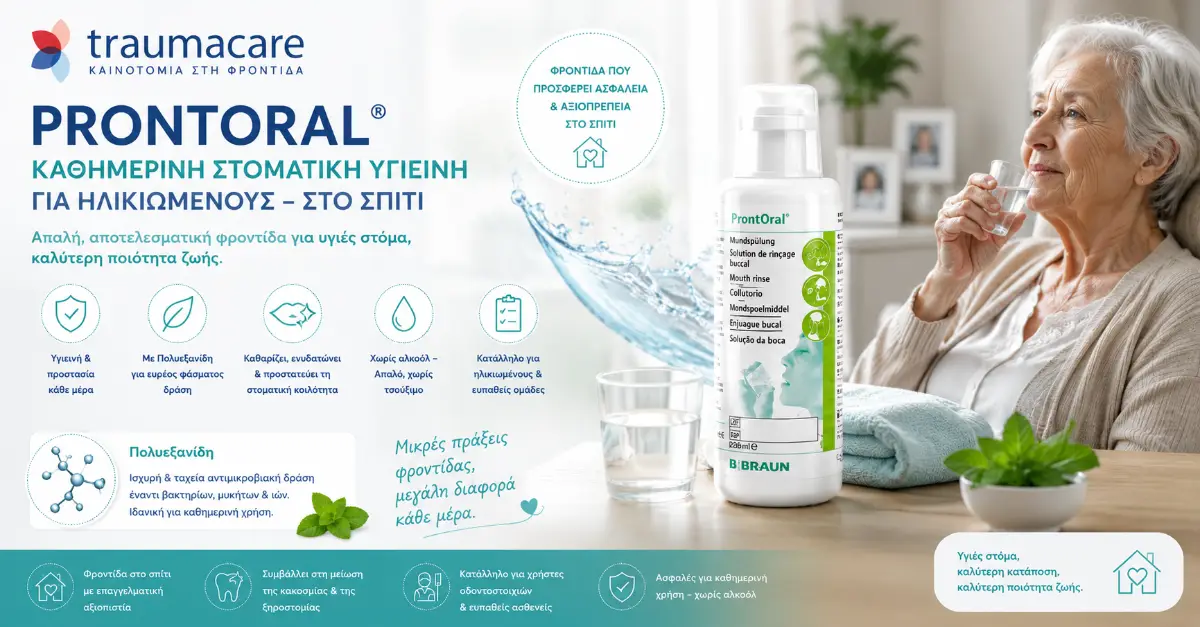
Ústní hygiena u starších osob – zejména u těch, kteří žijí s chronickými problémy s pohyblivostí nebo kognitivním postižením – je jedním z nejvíce zanedbávaných aspektů každodenní péče. Přestože starší pacient postupně ztrácí samostatnost, jeho ústní zdraví je i nadále přímo spojeno s jeho celkovým stavem: ovlivňuje výživu, sociální kontakt a dokonce i riziko hospitalizace pro zápal plic.
V tomto článku představujeme praktického průvodce správným používáním ProntOral® doma pro starší pacienty s různými potřebami – od aktivního důchodce až po ležícího pacienta. Článek je primárně určen rodinám a pečovatelům, kteří potřebují jednoduché, jasné a bezpečné pokyny.
Traumacare Poznámka: Jsme výhradním distributorem společnosti B|Braun v Řecku. ProntOral® je k dispozici s doručením domů po celé zemi.
1. Proč je ústní hygiena u starších lidí zásadní
S věkem a nehybností dochází v ústech k několika paralelním změnám:
- Snížená produkce slin (často v důsledku léků: antihypertenziv, diuretik, antidepresiv)
- Obtíže s čištěním zubů v důsledku artritidy, slabosti nebo kognitivního poklesu
- Změna ústní flóry směrem k agresivnějším patogenům
- Tvorba biofilmu na zubech a zubních protézách
- Křehčí sliznice, náchylnější k aftám a zraněním
- Častější zápach z úst ovlivňující sociální kontakt
To vše vede k:
- Zvýšenému riziku respirační infekce: ústní flóra je hlavním zdrojem bakteriální pneumonie u starších osob se sníženou pohyblivostí
- Častější gingivitidě a parodontitidě s lokální bolestí a dysfagií
- Sníženému kalorickému příjmu v důsledku bolesti nebo ztráty chuti
- Obtížím s adaptací zubní protézy
2. Proč je ProntOral® vhodný pro domácí použití
Na rozdíl od běžných ústních vod prodávaných v supermarketech:
| Vlastnosti | Výhody pro seniory |
|---|---|
| Bez alkoholu | Nevysušuje již tak suchá ústa |
| Bez chlorhexidinu | Nezanechává skvrny na zubech ani zubních protézách |
| Neinteraguje s fluoridem | Kompatibilní s běžnými zubními pastami |
| Mátová příchuť, mírná | Nezpůsobuje pálení citlivé pokožky sliznice |
| Není nutné oplachovat | Jednoduché použití, méně kroků |
| Působí proti multiretrovirovým refluxním onemocněním (MDRO) | Důležité pro hospitalizované/propuštěné pacienty |
| Léčí afty | Časté u starších osob |
| Léčí zápach z úst | Zlepšuje sociální kontakty a sebevědomí |
| Dobrý bezpečnostní profil | Netoxický při náhodném požití v malém množství |
| Zabraňuje zubnímu plaku, zubnímu kazu a zánětu dásní | Udržuje ústní dutinu dlouhodobě zdravou |
3. Kdy je ProntOral® vhodný pro domácí použití
Scénář A: Aktivní senioři (60–75 let)
Denní použití: 1× denně po večerním čištění zubů. Prevence zubního plaku, zánětu dásní, zápachu z úst.
Scénář B: Senioři se sníženou pohyblivostí
Denní použití: 2× denně. Příspěvek k obecné hygieně, když je efektivní čištění zubů obtížné.
Scénář C: Senioři po hospitalizaci
Dočasné užívání 7–10 dní: 2–3× denně. Významná ochrana proti MDRO, které mohly být kolonizovány v nemocnici.
Scénář D: Pacient upoutaný na lůžko
Denní užívání: 2–3× denně pečovatelem. Toto je kritický zásah pro prevenci respiračních infekcí.
Scénář E: Pacient s demencí
Denní užívání: 2× denně pečovatelem s vatovým tamponem nebo houbičkou. Není nutná spolupráce pacienta.
Scénář F: Starší osoba s častými aftami
Cílené použití: 3–4× denně do vymizení. Dále lokální aplikace na afty pomocí tamponu.
Scénář G: Starší osoba s halitózou
Denní použití: Zpočátku 2× denně po dobu 2 týdnů. Poté udržovací dávka 1× denně.
4. Jak podávat ProntOral® starší osobě, která se nedokáže sama vypláchnout
Toto je nejčastější otázka, kterou dostáváme od pečovatelů. Níže jsou uvedeny kroky:
Materiály
- ProntOral® 250 ml
- Houbička nebo velký vatový tampon (typu Yankauer)
- Ručník
- Jednorázový kelímek (15–20 ml)
- Rukavice
Kroky
- Příprava polohy pacienta: Umístěte pacienta do polosedu (45°), ne do polohy vleže. Pokud je pacient upoután na lůžko, zvedněte postel.
- Ochrana oděvu: Ručník kolem krku.
- Čištění vatovým tamponem: Namočte houbičku do přípravku ProntOral® (nebo na ni nalijte trochu roztoku). Čistěte:
- Zuby (ze všech stran)
- Dásně
- Vnitřní povrch tváří
- Jazyk (zezadu dopředu)
- Měkké patro
- Houbičku často vyměňujte, pokud je velmi znečištěná.
- Otřete suchou houbičkou nebo gázou, oplachování není nutné.
- Rty hydratujte vazelínou nebo kakaovým máslem.
Doba trvání
Celý proces trvá 3–5 minut. V rámci denní péče jej lze provést po snídani a před spaním.
Pro pacienty s zubní protézou
- Vyjměte zubní protézu
- Čistěte zubní protézu odděleně (měkký kartáček + voda)
- Aplikujte ProntOral® do ústní dutiny, jak je uvedeno výše
- Před opětovným vložením zubní protézy nechte působit 2–3 minuty
- Zubní protézu lze také jednou týdně namočit na 10 minut do ProntOral®
5. Kontrola ústní dutiny: na co si dát pozor denně
Pečlivý pečovatel dokáže problémy odhalit včas. Denně kontrolujte:
- Barva dásní: obvykle růžová, znepokojivá je jasně červená nebo černá
- Bílé plaky: může být Candida – pokud nezmizí po čištění zubů, informujte svého lékaře
- Afty: malé žlutobílé vřídky – obvykle samy odezní
- Krvácení dásní: příznak zánětu dásní nebo závažnějšího problému
- Zápach z úst: může naznačovat infekci, sucho v ústech nebo zadržování jídla
- Bolest při jídle: možný zubní kaz nebo bolest
- Uvolněné dásně zubní protézy: je nutné je zubaři upravit
6. Kdy navštívit lékaře/zubaře
Ačkoli ProntOral® léčí mnoho problémů sám o sobě, v některých případech je nutné okamžité odborné vyšetření:
- Silná bolest, která neustupuje do 2–3 dnů
- Horečka v kombinaci s ústními příznaky
- Krvácení, které neustává
- Potíže s dýcháním nebo polykáním
- Bílé plaky, které se rychle šíří
- Afty, které trvají > 10 dní nebo jsou velmi velké
- Oteklé dásně s hnisem
⚕️ Indikace, kontraindikace a bezpečnost domácí péče
Pro koho je nejdůležitější
- Senioři > 65 let se sníženou schopností ústní hygieny
- Upoutaní na lůžko pacienti (zvýšené riziko aspirační pneumonie)
- Lidé s demencí/Alzheimerovou chorobou
- Pacienti s dysfagií po mrtvici
- Senioři po hospitalizaci (prevence multiretrovirálních refluxních onemocnění) převoz domů)
- Lidé se suchem v ústech z polyfarmacie
- Nositelé zubních protéz
Kdy nepoužívat
- Známá alergie na podobnou skupinu ústních vod
- Těžká dysfagie bez možnosti sát nebo plivat → preferují se namočené houbičky s odsáváním pečovatelem
- Děti do 4 let, které mohou žít doma (vždy se držte dál)
Nežádoucí účinky – na co by si měl pečovatel dávat pozor
U starších pacientů je většina nežádoucích účinků lokální a mírná:
| Možná reakce | Četnost | Co dělat |
|---|---|---|
| Mírné štípání v aktivní ráně | Vzácné | Pokračovat – odezní po 2–3 použitích |
| Přechodná změna chuti | <5 % | Netýká se |
| Zarudnutí sliznice | Vzácné | Přerušit na 24 hodin, znovu zahájit |
| Vyrážka kolem úst | Velmi vzácné | Přestaňte – doporučení lékaře |
| Dýchací potíže | Extrémně vzácné | Okamžitě volejte 166 |
Co NENÍ problém
- Malé náhodné požití (<5 ml): neobsahuje toxické složky
- Kousnutí čerstvé máty peprné: normální – indikuje správné pokrytí sliznice
- Mírně „chladná“ ústa: požadovaný přínos přípravku
Kdy volat lékaře
- Přetrvávající hnis nebo krvácení dásní, které neustane do 10 minut
- Horečka > 38 °C spojená s ústními příznaky
- Rychle se šířící bílé plaky
- Afty trvající > 3 týdny bez hojení
- Potíže s polykáním jídla, které se objevily náhle
- Změna chování starší osoby s demencí (možná bolest, která není vyjádřena verbálně)
Kompatibilita s léky na předpis
ProntOral® neinteraguje s:
- Antikoagulancia (warfarin, NOAC, aspirin)
- Antihypertenziva (β-blokátory, ACE inhibitory, ARB, diuretika)
- Antidiabetika (metformin, inzulin, agonisté GLP-1)
- Léky na demenci (donepezil, memantin, rivastigmin)
- Antidepresiva (SSRI, SNRI)
- Statiny
Je bezpečné používat paralelně bez úpravy jiné léčby.
8. Kombinace s dalšími produkty B|Braun v domácí péči
Mnoho starších lidí potřebuje více než jeden produkt. V Traumacare často doporučujeme:
- Gel na rány Prontosan®: na malé proleženiny
- Roztok / ubrousky Prontoderm®: pro prevenci kožních infekcí
- Actreen® Mini / Hi-Lite: pro seniory s inkontinencí
- Ochranný krém Askina®: pro ochranu pokožky kolem stomií nebo ran
Všechny produkty pocházejí od společnosti B|Braun a vyznačují se stejnou spolehlivostí a chemickou kompatibilitou.
9. Praktické týdenní plánování
| Den | Ráno | Odpoledne | Večer |
|---|---|---|---|
| Pondělí | Čištění zubů + ProntOral® | Voda | Čištění zubů + ProntOral® |
| Úterý | Čištění zubů + ProntOral® | Voda | Čištění zubů + ProntOral® |
| Středa | Čištění zubů + ProntOral® | Voda | Čištění zubů + ProntOral® + celková kontrola ústní dutiny |
| Čtvrtek | Čištění zubů + ProntOral® | Voda | Čištění zubů + ProntOral® |
| Pátek | Čištění zubů + ProntOral® | Voda | Čištění zubů + ProntOral® |
| Sobota | Čištění zubů + ProntOral® | Čištění zubních protéz | Čištění zubů + ProntOral® |
| Neděle | Čištění zubů + ProntOral® | Voda | Čištění zubů + ProntOral® |
Tento program lze přizpůsobit vašim potřebám – v případě potřeby přidat třetí použití.
10. Závěr
Ústní hygiena u starších osob není „zdvořilost“. Je to základní zdravotní postup, který zabraňuje hospitalizacím, udržuje výživu a zlepšuje kvalitu života. S produktem, jako je ProntOral® – snadno použitelným, bezpečným, chutným a účinným proti všem hlavním patogenům v ústní dutině – se běžná péče o ústní dutinu stává dosažitelnou doma pro každého pečovatele.
Prevence plaku, zubního kazu, gingivitidy, parodontitidy. Léčba aft a zápachu z úst. Cílený antimikrobiální účinek. To vše z lahvičky, která vydrží 2–3 týdny, za cenu odpovídající pouhým několika eurům za den péče.
Související články v sérii
- Polyhexanid (PHMB) při dekolonizaci ústní dutiny
- Mukozitida u onkologických pacientů
- Ústní hygiena a prevence: od stomatologie po nemocniční infekci
Objednejte si ProntOral® domů
➤ ProntOral® 250 ml
Doprava zdarma po celém Řecku. Pro častější objednávky (pacienti upoutaní na lůžko, domácí péče) kontaktujte zákaznický servis ohledně opakované zásilky.
Bibliografie
- B|Braun Melsungen AG. Stránka produktu ProntOral®. catalogs.bbraun.com (přístup 2026-05).
- van der Maarel-Wierink CD, et al. Péče o ústní zdraví a aspirační pneumonie u křehkých starších lidí. Gerodontologie. 2013;30(1):3-9.
- Sjögren P, et al. Systematický přehled preventivního účinku ústní hygieny na pneumonii. J Am Geriatr Soc. 2008;56(11):2124-30.
- Müller F. Ústní hygiena snižuje úmrtnost na aspirační pneumonii u křehkých starších lidí. J Dent Res. 2015;94(3 Suppl):14S-16S.
- Yoneyama T, et al. Péče o ústní dutinu a pneumonie. Lancet. 1999;354(9177):515.
- Lewis A, et al. Zdraví ústní dutiny v dlouhodobé péči o starší pacienty. Aust Dent J. 2015;60(1):82-91.
- Müller G, Kramer A. Index biokompatibility antiseptických látek. J Antimicrob Chemother. 2008;61(6):1281-7.
${{products:190}}
Redaktor a editor
Redaktor: Traumacare Medical Group — výhradní distributor B|Braun v Řecku.
Naposledy aktualizováno: květen 2026 · Prohlášení: Informativní článek, nenahrazuje lékařskou pomoc.
Kontaktujte lékařský tým Traumacare
Máte dotazy ohledně přípravku ProntOral®?
Bezplatná konzultace pro použití na lůžkovém oddělení, JIP, v pečovatelském domě nebo při přípravě na operaci.
| ✉️ Kontaktní formulář | 💬 Viber Traumacare ✓ |
📞 Telefon: 2311 286262