



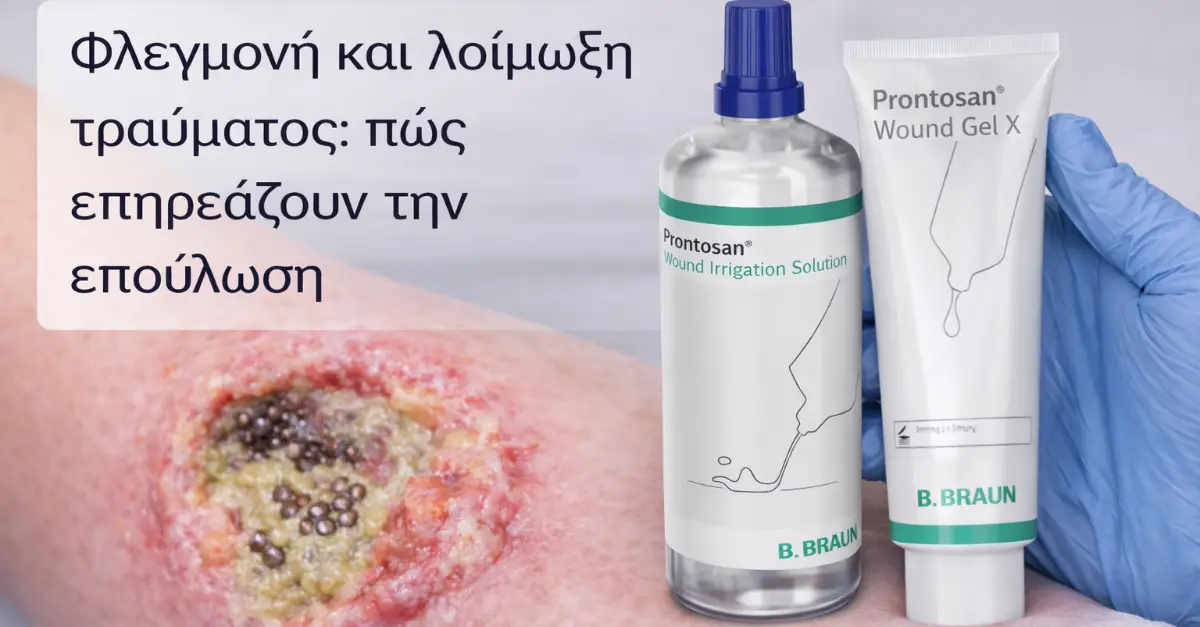
A wound or ulcer may be delayed in healing even when the tissue has been properly prepared and managed. One of the most common reasons is the presence of inflammation or microbial burden.
In the context of TIME , stage I (Infection / Inflammation) concerns the identification and proper management of factors that burden the wound and prevent normal healing.
Inflammation and infection: what is the difference
Inflammation is a normal response of the body during healing. However, when it is prolonged or excessive, it can delay the process.
Infection occurs when microorganisms multiply uncontrollably in the wound and overcome the body's defense mechanisms.
In practice, these two stages often coexist and require careful evaluation.
When is a wound considered aggravated
A wound or ulcer may be considered aggravated when:
- delayed healing without apparent cause,
- increased pain or tenderness,
- redness or warmth around the wound,
- change in discharge or odor,
- worsening of the wound appearance.
The role of biofilm
Modern wound care has recognized the importance of biofilm , an organized microbial structure that can grow on the wound surface.
Biofilm:
- is not always visible,
- is not easily removed by simple cleaning,
- may harbor microorganisms,
- is associated with chronic inflammation and delayed healing.
Why proper management is critical
Inadequate management of inflammation or microbial burden can lead to:
- persistence of the wound,
- complications,
- increased need for more invasive solutions.
The correct approach is based on early recognition and systematic care.
The importance of proper cleaning
Cleaning is a key element in the management of microbial burden. The aim is:
- the removal of aggravating factors,
- the reduction of the microbial load,
- the support of an environment that is conducive to healing.
Indicative products in stage I
The following are indicative and their use is always in accordance with the instructions and guidance of a healthcare professional.
-
Prontosan® Wound Irrigation Solution
Supports wound cleansing and microbial load management in the context of modern wound care. -
Prontosan® Wound Gel X
Helps maintain appropriate wound conditions, especially in cases of increased load.
Note: The product report is for informational purposes only and does not replace medical or nursing advice.
When to re-evaluate
The condition of a wound may change. Re-evaluation is required when:
- the condition worsens,
- signs of infection appear,
- healing remains stagnant.
How Stage I is linked to the next steps
Proper management of inflammation and microbial burden:
- protects the tissue,
- facilitates moisture regulation,
- and allows the wound to proceed to the next stages of healing.
What comes next
The next article in the series will discuss moisture balance (M – Moisture) and why it plays a crucial role in wound and ulcer care.
This article is for informational purposes only and is based on internationally recognized trauma care practices. It is not a substitute for medical or nursing evaluation.
Edited by: Traumacare Team