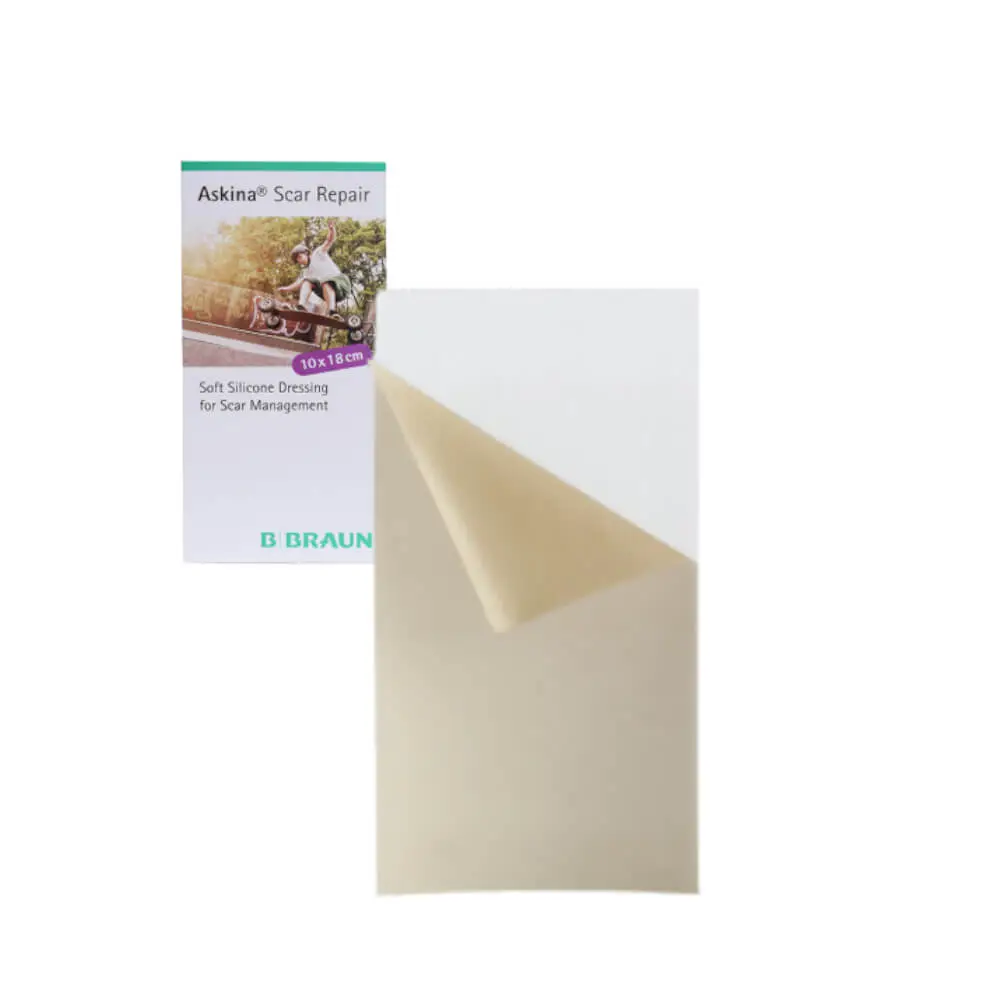
СИЛІКОНОВІ ПЛАСТИНИ 10×18 cm · B. Braun Askina® Scar Repair
Коли рубець — не лінія
а площа.
Опік, пересадка шкіри, абдомінопластика, широкий келоїд на грудях чи плечі. Тут потрібна не довжина і не маленький квадрат — потрібна площа. Пластина 10×18 cm — це 180 квадратних сантиметрів, майже стільки ж, скільки п'ять пластин 5×7,5, і ви ріжете її під будь-яку потрібну форму.
2–6 місяців
тривалість курсу
🔥 Опіки & трансплантати📐 180 cm² на пластину✂️ Ріжеться під будь-яку форму🚚 Відправлення за 24–48 год💧 Водостійка & UV
ПРОБЛЕМА ПЛОЩІ
На великому рубці малі пластини
залишають стики.
Коли рубець широкий, виникає спокуса накрити його кількома невеликими шматками. Але кожен стик між двома пластинами — це лінія, яка відстає: туди потрапляє піт, там вона відклеюється першою, і вздовж тієї лінії рубець залишається відкритим непомітно для вас. Є й практичний бік: п'ять шматків означає зняти п'ять, вимити п'ять і висушити п'ять — щодня. А саме щоденний цикл і не витримує ускладнень. Один шматок, що закриває весь рубець, завжди кращий за три, які його ділять.
Одна пластина — як п'ять малих
10×18 cm — це 180 квадратних сантиметрів, майже уп'ятеро більше за площу пластини 5×7,5. Її не обов'язково використовувати цілою: ви розрізаєте її на смужку, квадрат, кут — на будь-яку форму, яку має ваш рубець, завжди із запасом 1 cm по колу. Силікон діє однаково в кожному розмірі: він утворює замкнений, проникний для кисню шар, який обмежує втрату води з епідермісу та зберігає ділянку зволоженою і захищеною, зокрема від ультрафіолетового випромінювання, що робить нові рубці темнішими. Міжнародні настанови з ведення рубців ставлять силіконові пластини на перше місце серед неінвазивних засобів. Велика пластина додає не іншу дію — а те, що вам не доводиться стикувати шматки.
Для яких рубців — і коли ні
Важлива межа — не тип рубця, а його стан: пластину накладають лише на закриту рану.
ТАК, ДЛЯ ЦИХ
- ✓Опіки після реепітелізації, на великій ділянці
- ✓Рубці після пересадки шкіри та в місцях забору трансплантата
- ✓Абдомінопластика та великі розрізи на животі
- ✓Рубці після операцій на грудях
- ✓Широкі келоїди на грудях, плечі чи спині
- ✓Будь-який рубець, який не вміщується на пластину 5×7,5
НІ — І ЧОМУ
- ✗НІ на відкриту або інфіковану рану — абсолютне протипоказання
- ✗Не раніше, ніж рана закриється і будуть зняті шви або кліпси
- ✗Обережно за відомої алергії на силікон
- ✗Не заміна медичному спостереженню — за подразнення чи погіршення припиніть використання і зверніться до лікаря
На практиці
1
Перед першим накладанням
Рана має бути повністю закрита, а шви чи кліпси — зняті. Ніколи на відкриту або інфіковану рану. Шкіра має бути чистою і цілком сухою, без крему чи олії там, де приклеїться пластина.
2
Накладання
Виберіть або розріжте пластину так, щоб вона перекривала рубець щонайменше на 1 cm з кожного боку. Накладіть її без натягу — натяг подразнює шкіру під нею.
3
Щоденний цикл — кожні 23 години
Пластина залишається на шкірі майже цілу добу. Раз на день, приблизно кожні 23 години, ви знімаєте її та виконуєте цикл по порядку: очищуєте ділянку м'яким засобом — Softaskin зроблений саме для цього —, миєте і саму пластину теплою водою з м'яким милом без тертя, і дуже добре висушуєте обидві. Висушування — критичний момент: фен на холодному чи теплуватому повітрі робить це швидко й ретельно — ніколи гаряче повітря на рубець. Шкіра і пластина мають бути повністю сухими перед повторним накладанням; волога, що залишилася під сподом, — причина номер один, чому пластина передчасно втрачає липкість.
4
Коли міняти пластину
Та сама пластина використовується повторно. Ви міняєте її не за календарем, а коли її липкість вичерпується: коли вона більше не тримається сама, відстає по краях або зміщується протягом дня. На практиці це зазвичай 3–7 днів — за ретельного миття та доброго висушування вона тримається ближче до верхньої межі. Тоді ви відкриваєте наступну з 5 пластин в упаковці.
5
Коли припинити
За подразнення, висипу, болю, ознак інфекції або несподіваного погіршення рубця негайно припиніть і зверніться до свого лікаря. Пластина не замінює медичне спостереження.
Чотири речі, які варто знати
📐
180 cm² — майже стільки, скільки п'ять малих пластин
Одна пластина 10×18 дає площу майже п'яти пластин 5×7,5. Уся упаковка з 5 пластин — це 900 квадратних сантиметрів силікону.
🧩
Жодних стиків над рубцем
Кожен стик між двома шматками відклеюється першим і залишає рубець відкритим уздовж лінії. Один шматок, що закриває все, такої проблеми не має.
🥇
Перша лінія в міжнародних настановах
Силіконові пластини — перший неінвазивний засіб, який рекомендують, попереду ін'єкцій чи лазера. Низька вартість, низький ризик — але не гарантія.
⚖️
Коли вона вам НЕ потрібна
В абсолютних цифрах це найдорожча упаковка серії. Якщо рубець невеликий або вузький, ви купуєте площу, яку ніколи не використаєте — там правильна упаковка це 5×7,5 або 2×14.
Чотири запитання перед замовленням
🔥
«Мій рубець після опіку займає велику ділянку.»
Лише після реепітелізації, ніколи на відкриту поверхню. За великого опіку спершу запитайте свого лікаря.
✂️
«Чи обов'язково використовувати цілу пластину?»
Ні. Розріжте її за формою рубця, із запасом 1 cm. Те, що залишиться, зберігається чистим і сухим у своїй упаковці.
🧼
«Чи складніший щоденний догляд?»
Трохи, і це варто знати: велика пластина сохне довше — а саме висушування вирішує, скільки вона прослужить.
📐
«10×18 чи дві менші?»
Один шматок завжди кращий за два. Але якщо рубець невеликий, не купуйте площу, яка вам не знадобиться.
Технічні характеристики
| 📐 Розмір пластини | 10×18 cm · 180 cm² · розрізається за розміром і формою рубця |
|---|
| 📦 Упаковка | 5 пластин · 900 cm² загалом |
|---|
| ✂️ Розрізання | Одна пластина дає майже площу п'яти пластин 5×7,5 · завжди із запасом 1 cm по колу |
|---|
| ⏳ Тривалість курсу | 2–6 місяців · давніші рубці — від 3 місяців до року |
|---|
| ♻️ Строк служби однієї пластини | Доки липкість не вичерпається · на практиці 3–7 днів |
|---|
| 🕐 Час носіння | Постійно, приблизно 23 години на добу · одне зняття на день для очищення |
|---|
| 🧴 Матеріал | М'який медичний силікон, самоклейкий і прозорий |
|---|
| 💧 Водостійкість | Так — тримається під душем |
|---|
| ☀️ Захист від UV | Так — ультрафіолет робить нові рубці темнішими |
|---|
| 📏 Накладання | Запас щонайменше 1 cm за краї рубця · без натягу |
|---|
| ✅ Показання | Закриті рани після великих втручань, пересадки шкіри чи абдомінопластики · опіки після реепітелізації · широкі келоїди та гіпертрофічні рубці |
|---|
| ⛔ Протипоказання | Відкриті або інфіковані рани · обережно за відомої алергії на силікон |
|---|
| 🧼 Очищення пластини | М'яке мило і тепла вода, без тертя · повне висушування перед накладанням — фен на холодному повітрі це пришвидшує |
|---|
| 🏭 Виробник | B. Braun — група B. Braun Melsungen AG, Німеччина |
|---|
| 🔢 Коди | SKU W0240 · EAN 26941094079474 |
|---|
Оригінал B. Braun
EAN 26941094079474
Відправлення 24–48 год
Доставка кур'єром із відстеженням
Усі чотири розміри
5×7,5 · 2×14 · 4×30 · 10×18
Просто запитайте
Скажіть нам розміри рубця
Відповідність вимогам і безпечне використання
Медичний виріб. Наведене нижче стосується кожної одиниці, яку надсилає Traumacare.
Виробник
B. Braun — група B. Braun Melsungen AG, Carl-Braun-Straße 1, 34212 Melsungen, Німеччина
Нормативна база
Медичний виріб із маркуванням CE згідно з Регламентом (ЄС) 2017/745. Призначений виключно для закритих ран і для рубців — не накладається на відкриту або інфіковану рану, ані до зняття швів чи кліпс. За відомої алергії на силікон потрібна обережність. Якщо з'явиться подразнення, ознаки інфекції або несподіване погіршення рубця, припиніть використання і зверніться до свого лікаря. Юридичний виробник, номер партії та термін придатності зазначені на упаковці та в інструкції із застосування, що додається.
Інструкція із застосування
Постачається в друкованому вигляді, грецькою та англійською мовами, усередині упаковки. Прочитайте її перед першим використанням і зберігайте протягом усього часу користування виробом.
Партія та простежуваність
Номер партії (LOT) одиниці, яку ми вам надсилаємо, зазначається у вашому документі про придбання. Тож якщо виробник колись відкличе партію, ми точно знатимемо, кого сповістити.
Повернення
Запечатаний виріб, який з міркувань гігієни не підлягає поверненню після розпечатування. Запечатаний і неушкоджений, він повертається у звичайному порядку —
політика повернення.
Повідомлення про проблему
Якщо щось не так з упаковкою, маркуванням або роботою виробу,
зв’яжіться з нами або напишіть на
[email protected]. Ми фіксуємо кожне звернення й передаємо його виробнику.
Ця сторінка є комерційним описом товару. Вона не замінює ні інструкцію виробника із застосування, ні рекомендацію вашого лікуючого лікаря чи медичної сестри.
Який розмір для якого рубця
Серія Askina має чотири розміри, і ми маємо всі. Велика пластина має сенс лише тоді, коли рубець цього вимагає — інакше ви купуєте площу, яку ніколи не використаєте.
- Askina® Scar Repair 4×30 cm (5 шт.) — для довгих і широких рубців
коли рубець це передусім довжина, але ширший за смужку 2 cm
- Askina® Scar Repair 5×7,5 cm (5 шт.) — для невеликих і округлих
лапароскопія, біопсія, видалена родимка — де велика пластина завелика
- Linovera® Gel з гіалуроновою кислотою — для місць, де пластина не тримається
обличчя, суглоби, розсіяні сліди — і та година, коли пластина знята
- Келоїдні & гіпертрофічні рубці
категорія з усіма розмірами серії — 5×7,5, 2×14, 4×30 і 10×18
Часті запитання
Наскільки великий рубець закриває одна пластина?
Пластина має 10×18 cm, але B.Braun вимагає 1 cm запасу з кожного боку. Тож ціла пластина закриває рубець приблизно до 8×16 cm. Якщо ваш більший, не обов'язково закривати його весь одразу — можна працювати ділянками, але запитайте свого лікаря, як це організувати на великому рубці.
Використовувати пластину цілою чи розрізати її?
Як вам зручніше. Пластина ріжеться на смужку, квадрат, кут або будь-яку форму, яку має ваш рубець, завжди із запасом 1 cm по колу. Ріжте чистими сухими ножицями, перш ніж знімати захисну плівку, і уникайте дуже гострих кутів — заокруглені краї тримаються краще. Те, що залишиться, зберігається чистим і сухим в оригінальній упаковці.
10×18 чи дві менші пластини поруч?
Один шматок. Кожен стик між двома пластинами — це лінія, яка відстає першою: туди потрапляє піт, і там рубець залишається відкритим непомітно для вас. Є й практичний бік — два шматки означають удвічі більше роботи в щоденному циклі зняття, миття та висушування.
На скільки вистачить 5 пластин?
Кожна пластина використовується повторно 3–7 днів, або доки тримає липкість. Якщо ви користуєтеся цілими пластинами, п'ять із них — це 15–35 днів. Якщо ріжете на частини, упаковки вистачає значно надовше — 900 квадратних сантиметрів це чимало силікону. Але на курс від 2 до 6 місяців на великому рубці закладайте реалістично більше ніж одну упаковку.
Чи підходить вона для рубця після опіку?
Так, але лише після реепітелізації — тобто коли поверхня повністю закрилася. Ніколи на відкриту або мокнучу поверхню. За великого опіку догляд за рубцем є частиною ширшого спостереження: спершу запитайте лікаря або опіковий центр, який вас веде.
Це найдорожча упаковка серії. Чи варта вона того?
Це цілком залежить від розміру рубця. У перерахунку на квадратний сантиметр вона найдешевша серед великих розмірів — приблизно на 26% дешевша, ніж упаковка 5×7,5. Але якщо ваш рубець невеликий, ви купуєте площу, яку ніколи не використаєте, і 5×7,5 чи 2×14 вийде значно дешевше. І чесна друга половина, незалежно від розміру: міжнародні настанови ставлять силікон на перше місце серед неінвазивних засобів, але Cochrane називає дані слабкими та схильними до упередженості. Розумний перший крок — не гарантія.









.jpg.webp)