



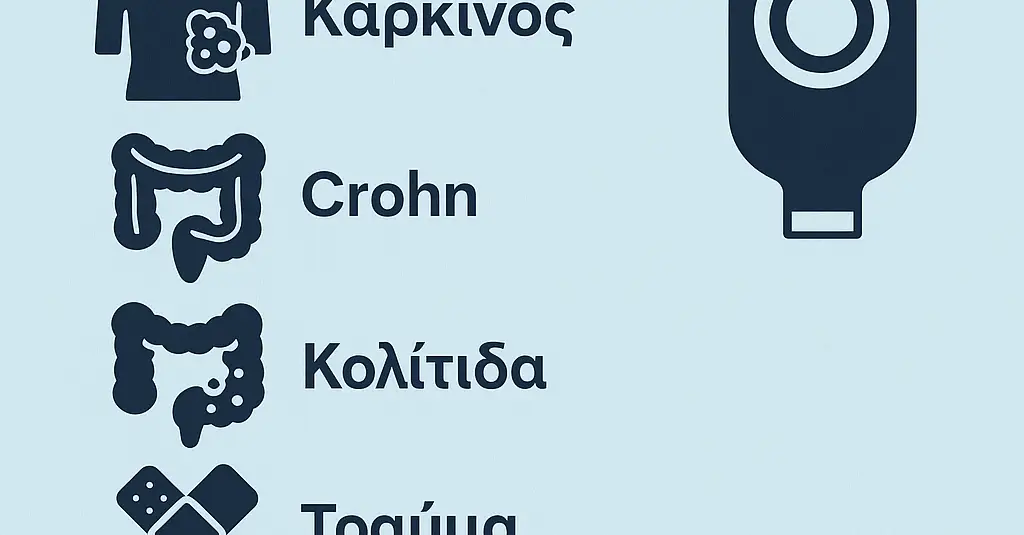
What Conditions Lead to a Stoma? Colorectal Cancer, Crohn’s Disease, Ulcerative Colitis and Other Causes
The creation of a stoma is a medical decision made when the normal function of the bowel or urinary system cannot be safely maintained. Below are the main medical conditions and situations that may lead to the creation of a stoma.
What does it medically mean to create a stoma?
A stoma is surgically created by a specialized medical team. Its purpose may be to temporarily divert the bowel to allow healing, or to permanently bypass a section that can no longer function properly.
The decision is based on the severity of the disease, safety considerations, and the overall therapeutic strategy.
1) Colorectal Cancer
Colorectal cancer is one of the most common reasons for stoma formation. Depending on the tumor’s location and extent, a stoma may be required as part of the surgical treatment.
- Temporary stoma – to protect a surgical connection (anastomosis) while it heals.
- Permanent stoma – when restoring normal bowel continuity is not possible.
In these cases, the stoma is part of the oncological treatment plan and aims to ensure patient safety and recovery.
2) Crohn’s Disease
Crohn’s disease is a chronic inflammatory bowel condition that can lead to complications such as strictures, fistulas, abscesses, or severe inflammation.
In complex or advanced cases, a stoma may be necessary either temporarily or permanently to allow the bowel to rest and recover.
3) Ulcerative Colitis
Ulcerative colitis is another inflammatory bowel disease. When the condition is severe, resistant to treatment, or associated with serious complications, surgical intervention may be required.
In specific surgical approaches, a stoma forms part of the overall treatment strategy.
4) Trauma and Emergency Situations
Severe abdominal trauma, bowel perforation, or life-threatening infections may require emergency stoma creation to protect the patient and stabilize their condition.
In some cases, such stomas are temporary and may be reversed once healing is complete.
5) Surgical Complications
Complications such as anastomotic leaks, severe infections, or failure of a previous surgical repair may necessitate the formation of a stoma to allow safe recovery.
Is a stoma always permanent?
No. Many stomas are temporary and planned for reversal once healing has occurred or treatment has been completed. The timing and possibility of reversal depend entirely on medical evaluation.
What happens after a stoma is created?
After surgery, patients receive basic education on stoma care. The adjustment period at home is important, and it is normal to have practical questions about daily management.
For a gentle introduction to the first days of adjustment, you may read: When You First Hear the Word “Stoma”
Need guidance for daily management after discharge?
If you have questions regarding practical stoma care at home, you may contact us for supplementary guidance, in coordination with your treating physician.
Contact form
Contact does not replace medical follow-up. For medical concerns, always consult your treating physician.